


 Listen Live
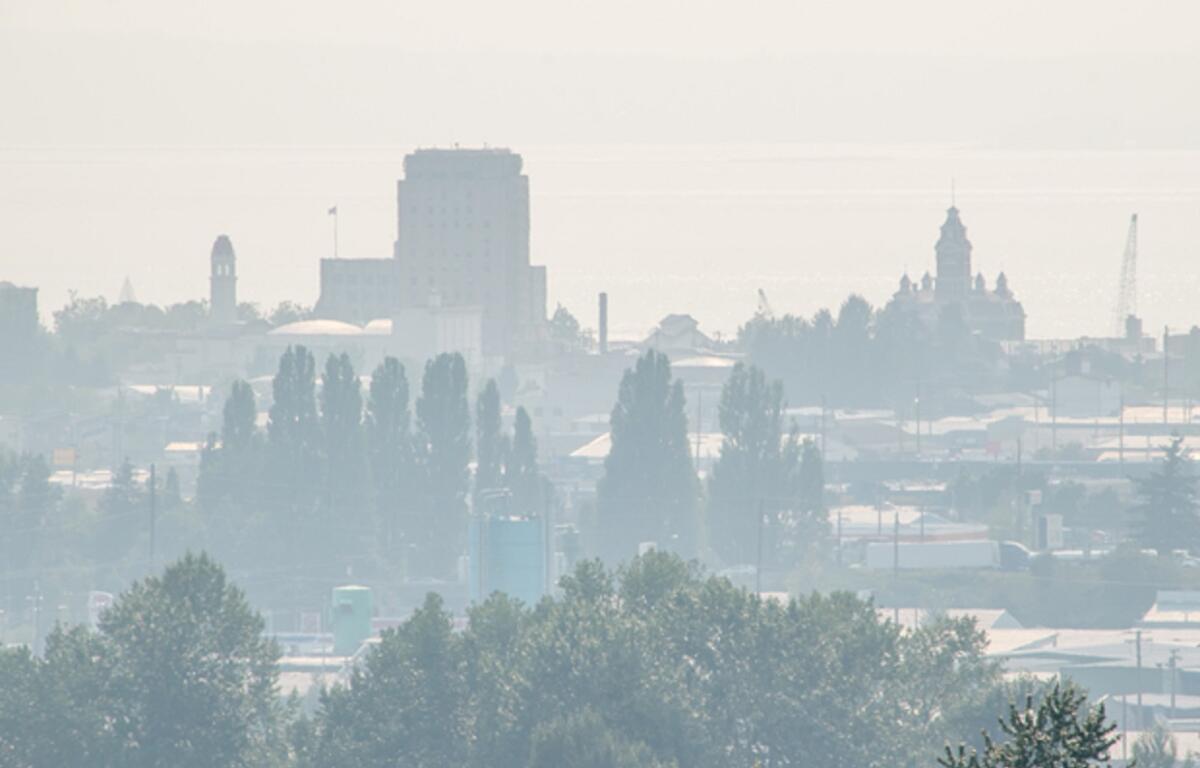

Is February too early to be thinking and talking about the coming wildfire season?
On one hand, it is because at this point, nobody knows for certain what conditions will be like in a few months.
“The lack of decent snowpack for the season is concerning, but that doesn’t exactly mean it will be a bad year. We should have a better idea by late April or early May when the Climate Prediction Center will release their seasonal outlooks,” said Evan Bing, who manages the Northwest Clean Air Agency’s monitor and sensor network and provides air quality forecasts.
Bing said here are a few things to consider:
Rain vs. Snow: Many storms have delivered rain instead of snow at mid-to-high elevations. In Washington, statewide snowpack is sitting at roughly 73 percent of median, with some basins in Oregon and the southern Cascades dipping below 50 percent.
Earlier Drying: Snow acts as a slow-release reservoir. Without a deep “snow bank” to keep fuels moist through July, the high-elevation forests will dry out weeks earlier than usual, effectively lengthening the “burn window.”
“Ultimately, it will really come down to what happens toward the end of winter and early spring,” he said.
But it’s not too early to start planning and preparing for how you can protect yourself and others from the dangers of wildfire smoke. Residents of Island, San Juan, Skagit, and Whatcom counties know how wildfire smoke has blanketed the area in recent years as it poured in from fires elsewhere — including Canada, Eastern Washington, Oregon, California, Idaho, and even overseas locations like Siberia (carried by the jetstream).
One thing all this smoke has in common: The too-tiny-to-see particles that you can inhale deeply into your lungs, where they damage delicate tissues. People with heart and lung issues, the elderly, and children are most at risk. But anyone can be harmed by breathing in smoke.
Make sure you’re aware of possible wildfire smoke events before they reach our area!
- Track local media reports.
- Pay attention to local government alerts.
- Check NWCAA’s social media (X/Twitter, Facebook, Threads, and Instagram) and our website (https://nwcleanairwa.gov/).
Also, be sure to check out these handy resources:
- NWCAA’s Wildfire Smoke Information page with materials on how to protect yourself and others during wildfire smoke events – https://bit.ly/3NKEh0B
- NWCAA’s Air Quality Center – https://nwcleanairwa.gov/air-quality-center/
- AirNow Fire and Smoke Map – https://fire.airnow.gov/
- Washington Smoke Blog – https://wasmoke.blogspot.com/
- How to make your own clean air fan (video) – https://www.youtube.com/watch?v=ujUFj2G9_-Y
NWCAA will share more information as it becomes available.