


 Listen Live
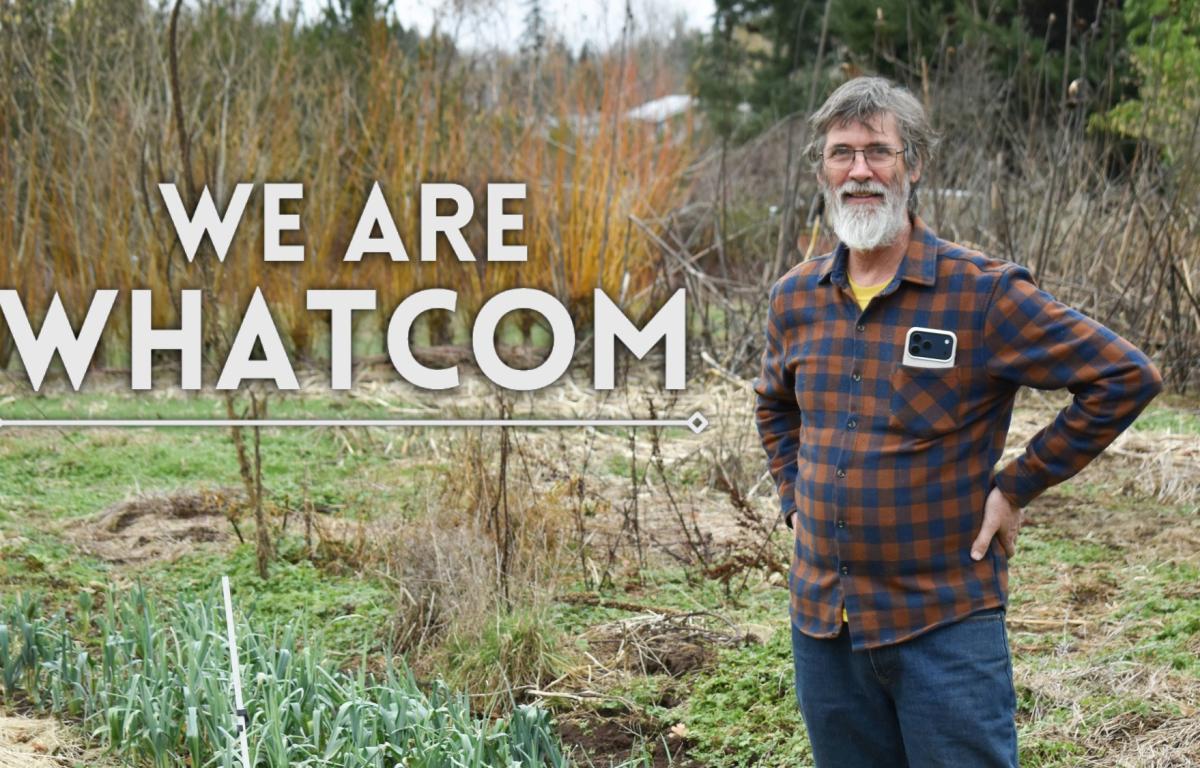

LAUREL, WA (MyBellinghamNow.com) – For the last couple decades, the Salish Seed Guild has worked to cultivate seeds that are cared for through the years, creating what co-founder Brian Kerkvliet calls a living seed library.
Kerkvliet’s approach to growing food is a little different than modern, mainstream agriculture, and the doctrine he and others ascribe to falls within the category of permaculture, the idea that agriculture can be done in a long-term, sustainable practice. Specifically, Kerkvliet runs a biodynamic homestead farm in the unincorporated community of Laurel.
Biodynamic farming can be described as a “woo woo” concept according to Kerkvliet. It predates modern organic farming and was pioneered by a man named Rudolf Steiner, a philosopher and scientist working around the turn of the 20th Century. Kerkvliet said the farm acts as “one living organism,” using every part of the plant and surrounding environment for cultivation. Animals on the property are often an aspect to a complete biodynamic system.
Synthetic herbicides and pesticides are never, ever used in any form of permaculture. The idea of using naturally occurring materials in cultivation extends to rejecting the use of GMOs and became a large part of the Salish Seed Guild’s philosophy.
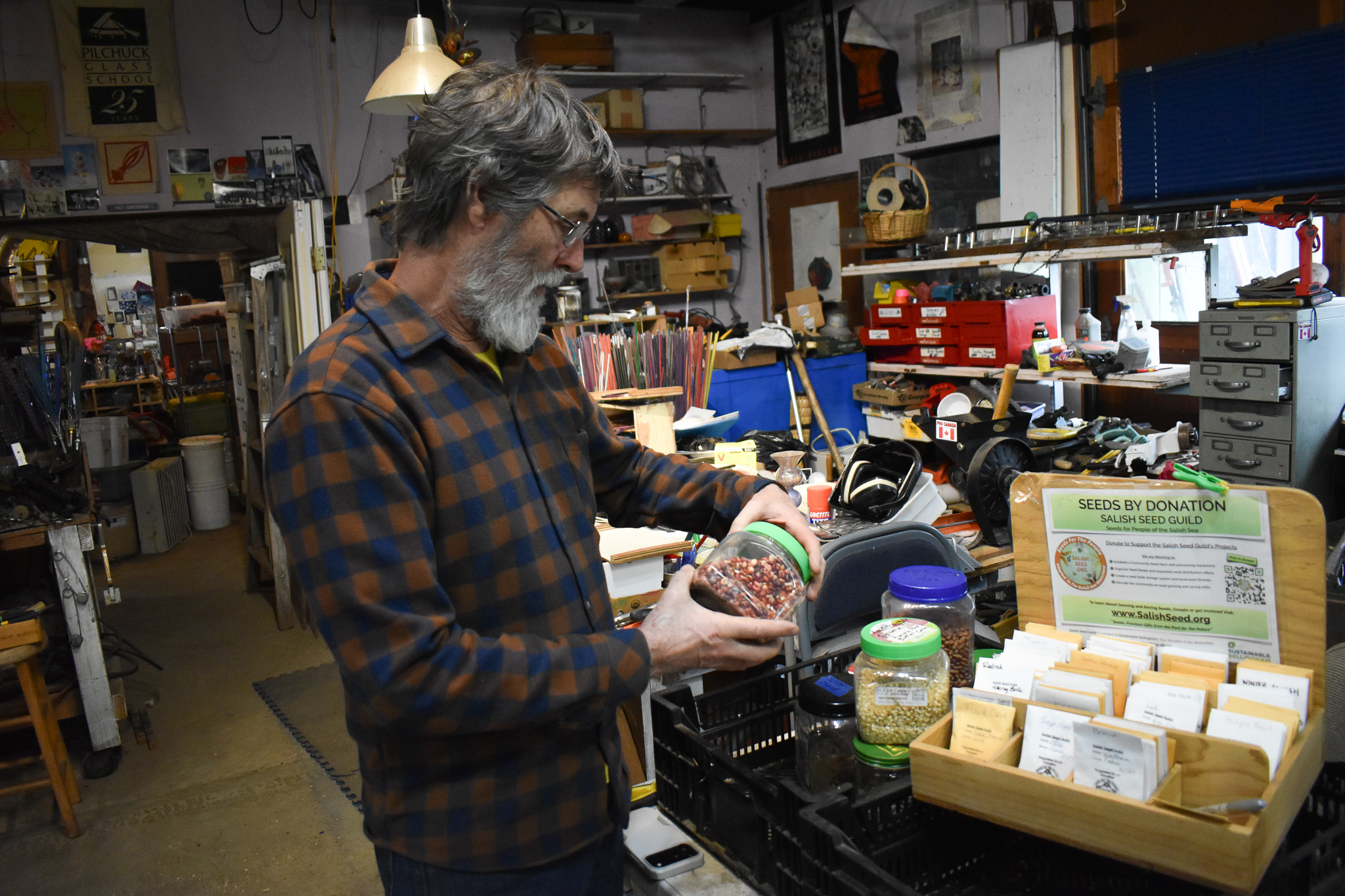
When asked about the start of Salish Seed Guild, Kerkvliet describes taking dry beans from the Bellingham co-op’s bulk section and trying to grow them into harvestable plants himself. At first the seeds did not grow the most prosperous plants.
“But by the fourth and fifth year, they were some of the best beans that I grew,” Kerkvliet said. “Because seeds learn your soils, your landscape, your methods, your climate, like all of these things, [it’s] about stewarding seeds that adapt to your local conditions and your local methodologies.” After this “aha!” moment, Kerkvliet began to search for other farmers in the bioregion that also wanted to cultivate seeds conscientiously, thus the birth of the guild.
“There’s been a number of iterations and evolution of the Salish Seed Guild. It was a loose, ad hoc organization to begin with, just a few people getting together a few times a year,” Kerkvliet said. The first seed swap happened in the fall as a way for the growers to exchange information about growing sustainable food in the community.
Over 25 years later, the guild still works in Whatcom County, holding annual Seed Swaps before the spring planting season and offering memberships to local gardeners.
“We also launched a program called Adopt a Seed program, so you can adopt any of our seeds from here, if you’re inexperienced,” Kerkvliet said. “You can ask for a mentor to help you grow it out and stuff, and if you need help processing it, you can bring it back. So, part of what the Salish Seed Guild is also we have a number of different kinds of specialized equipment for cleaning seeds and saving seeds, threshing seeds and years of experience between us all [on] how to how to efficiently process the seeds, and when the right time to do it is.”
Kerkvliet said one of his favorite things about the community around seed stewardship is the conversations that happen. The oral history that follows a lineage of seeds can traverse generations and even borders.
“Seeds are history. Seeds have a story like ‘My great aunt brought these from Missouri in the 1920s and they’ve planted them here, and we’ve grown them out for, you know.’ They have this history, this story, this legacy, and it’s part of culture.” – Brian Kerkvliet
A lifelong Washington resident, Kerkvliet grew up on the south end of Whidbey Island before moving to Whatcom County in 1981. He and his wife moved to the property that became Inspiration Farms several years later, offering space for their growing family, some crops to be sold to local restaurants and at their farmstand, as well as for Kerkvliet’s work as a glass artist. His work at Gossamer Glass Studios interacts with his interests in the natural environment, producing vases with diatom-reminiscent shapes in the body and creatures sculpted into the stems of goblets.
Inspiration Farms is also the site of community interaction. The homestead farm is a destination for many educational workshops, bringing students from early education to advanced university classes and garden clubs to the property to learn ideas of biodynamics and seed saving.
Kerkvliet said that around the start of the COVID-19 pandemic, he and other guild members began a community garden at the farm called the Salish Seed Garden. The garden has also fallen to the wayside Kerkvliet said as interest dwindled and gardeners grew older.
A founding member of the Whatcom Artist Studio Tour, Kerkvliet’s glass studio and shop are also part of the tour that happens the first two weekends of October.
When asked about what it means to Kerkvliet to dedicate so much of his time and resources to community work, he told My Bellingham Now about the variety of economies that are out there, not just a financial economy. Though it isn’t why Kerkvliet does it, he prefers to spend his time contributing to intellectual, spiritual and social economies.
“If you have a skill set, or you have resources, or you have a way to connect with the community, it’s really valuable to do that for a number of reasons,” he said. “One, it’s joyful to connect with the community. Number two, like making money is not [what] it’s all about.” He added that a part of permaculture’s philosophy is creating community with other humans as well as the plants and animals stewarded.
Kerkvliet describes the permaculture web as needing a variety of supports to exist properly, noting that the Adopt a Seed program is one way the web stays supported. Having several people grow seeds leads to greater chance for biodiversity by lowering chances of cross-pollination as well as redundancy. In case a crop goes bad, others will have grown the seed so it will survive to the next year.
The Salish Seed Guild will host their annual seed swap at the Bellingham Unitarian Fellowship on Saturday, Feb. 7 from 12 to 3 p.m. The fellowship has held the seed swap for some years now according to Kerkvliet and he expects a couple hundred people to show up to the event.
Entry to the swap requires either paying an entry fee or bringing your own seeds. Kerkvliet notes that seeds will have to be from a reputable source that has not been exposed to chemicals or genetic modification, nor cross-pollinated with contaminated crops.
We are Whatcom is a weekly column featuring Whatcom County residents making a positive impact on the community. To submit a Whatcom County resident to be featured, click here.