


 Listen Live


BELLINGHAM, WA (MyBellinghamNow.com) – When you go out on a hike in Whatcom County, you’re likely to encounter several types of flora and fauna. Large coniferous trees such as Douglas firs? Check. Squirrels, insects and birds? Check, check check.
Mushrooms? Definitely check, if you know where to look.
The Pacific Northwest has many opportunities to see fungi. As biologist Eric DeChaine puts it, you can “practically trip” over all the chanterelles in the woods of Whatcom County during the autumn.
DeChaine, a professor at Western Washington University and Bellingham resident, teaches classes in the botany discipline.
“I’ve been interested in fungi since I was a kid. I was the kid in sixth grade that had a lichen collection,” he said. “I’m really a naturalist so anything nature oriented, getting out a lot into the woods and things like that, and looking for mushrooms is just a good excuse to do that.”
He received his PhD at CU Boulder, was a postdoctoral fellow at Harvard University and taught at Wenatchee Valley College North in Omak before joining Western’s staff in the late 1990s.
DeChaine taught his first mycology class at Wenatchee Valley College, where he encountered something that blew his mind.
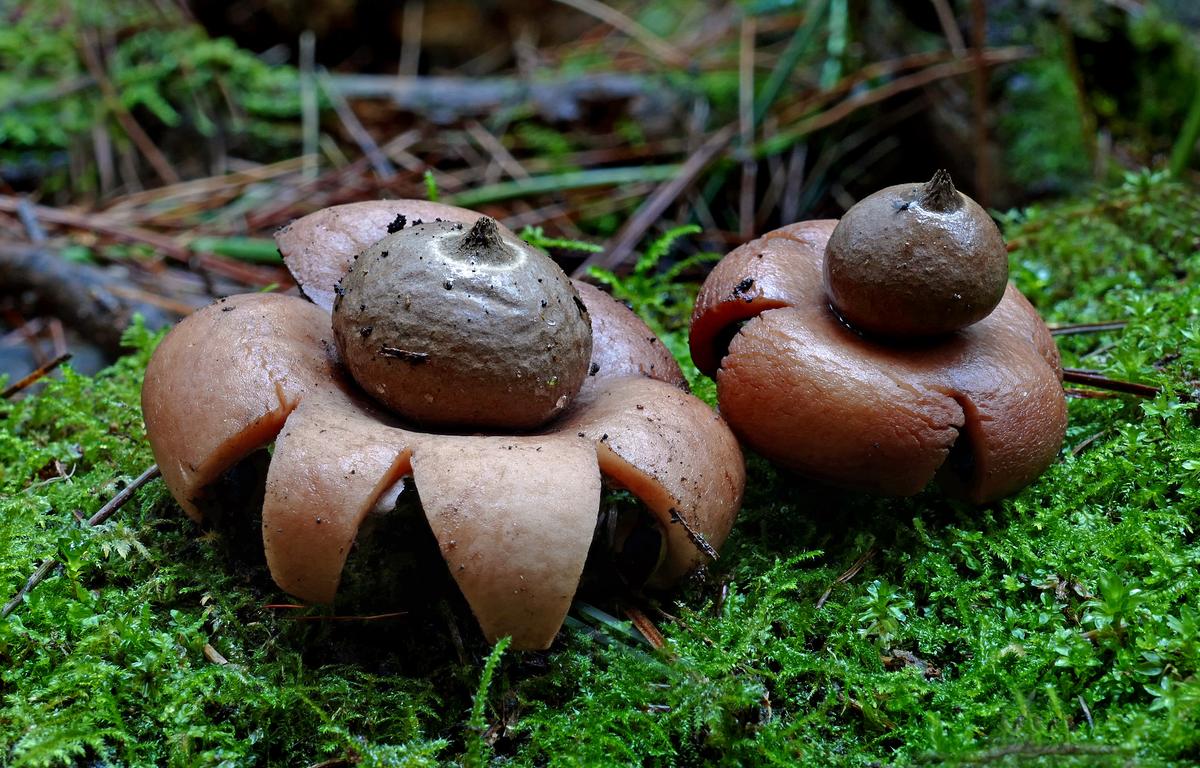
“I was just struck. I can remember being out and finding this thing that I had no idea what it was, and it was it was obviously a life form, but I was like, ‘What is this?’ And it turned out to be an Earth Star,” DeChaine said. “They have these what appear [to be] leathery petals, but it’s a puff ball that sits on the rest of this fungal base, and it opens up like a star.”
DeChaine’s father was a chemist, but opted to teach community college to offer a better work-life dynamic. This, coupled with friends that did research at top-tier universities having little time to be with their families, inspired DeChaine to follow a similar career move to his father.
“I wanted a balanced life, and that’s what Western offers: is that we do research, but we’re not a top-tier research university. We do a lot of teaching. The students get a lot out of that. I bring students out into the field with me, and that, I find is a really rewarding aspect of the job.”
Geography played a factor in DeChaine’s job placement. Following his time in Omak, DeChaine wanted to be in a more temperate climate with access to the ocean.
He uses the outside world of western Washington as a classroom for his students as well. DeChaine takes students on research trips to collect samples of different species regularly.
This fall, DeChaine has begun a new research project that he hopes to bring more people on to.
“I’ve started a research project in the Olympics, which is I think the most enchanting place around, and it’s really about trying to understand what environmental factors are influencing where different fungal species occur, and those environmental factors could be the plants that are there. It could be the soil type. It could be the amount of precipitation,” he said.
The research project is likely to last years, as DeChaine explains that the rainforest has many parts not yet catalogued by him or a mycologist doing similar work.
He notes that returning to the same place at different times can mean finding completely different species of fungi at the site.
“You always find something new. I was up at about 4,500 feet, 4,000 feet, and came across a chanterelle that I’d never seen before. But it was a chanterelle that was brighter, and it was like it had its vibrance turned up. It was really, really beautiful, and it turns out that this is a rainbow chanterelle,” DeChaine said.
“Another thing I found in the Olympics was a coral mushroom that was lemon yellow, and it literally smelled like lemonade. It was so you wanted to put it in your mouth. It was so glowing. I had never smelled a mushroom that smelled like that before.” – Eric DeChaine
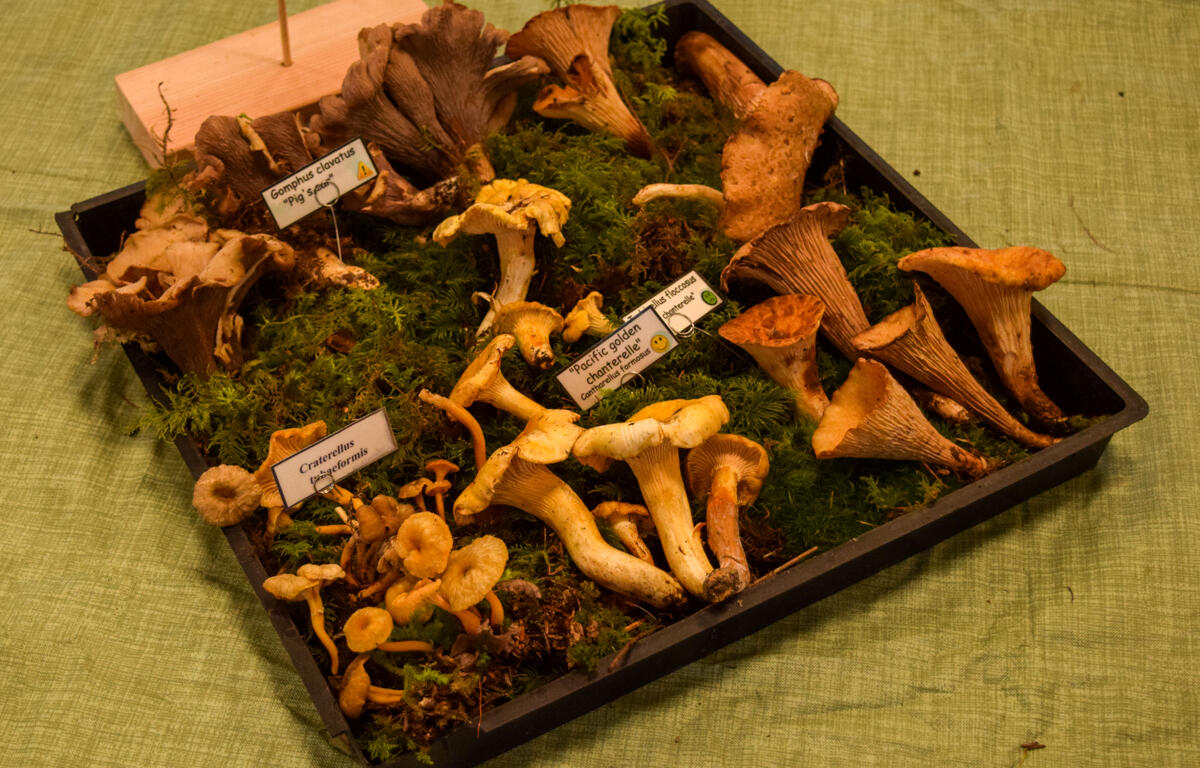
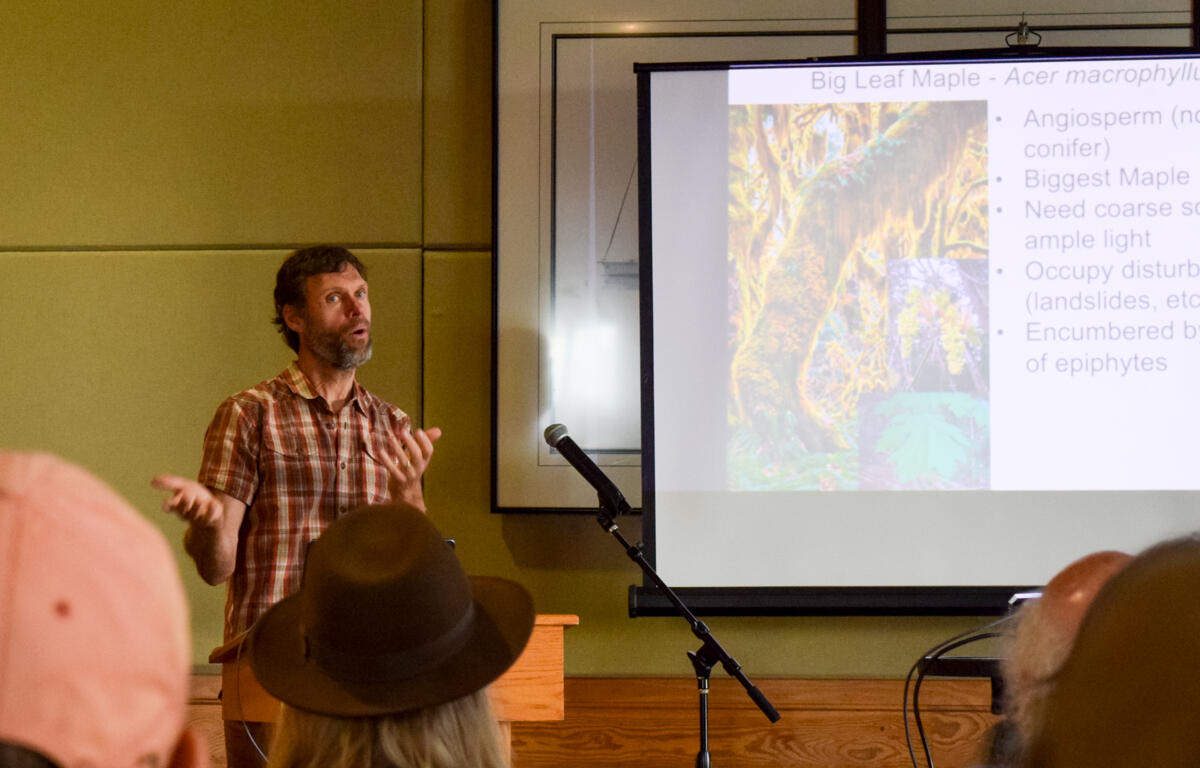
DeChaine recently gave a talk on his project at the Wild Mushroom Show held on Bellingham’s waterfront. He talked about the mycorrhizal associations between different plants and fungi species that give foragers and other mushroom hunters a leg-up in their searches in the woods of the Pacific Northwest.
For instance, chanterelle mushrooms are more likely to be found near Douglas fir trees as they mutually benefit from the proximity.
As for the science of fungi, the field that is building around learning how to understand how fungi work as how that can be used to make new items is fairly new. DeChaine tells his students that studying mycology is a bit of a frontier situation.
“I have students up at the university taking these classes, and so I just keep telling them, ‘If you want to go in and be a pioneer in some field right now, this is one of those places where you can really go for it,'” he said.
“I’ve been to Madagascar a couple times, and that’s a good example of a place where there’s almost nothing known. But even here, you could go to Stimpson [Family] Nature Reserve near town, or out in Olympics where I am, or up in the Cascades, and there’s a decent chance that you’re going to encounter something that no one knows is here, or maybe hasn’t been described before, just because there’s been less scientific interest or inquiry into that,” DeChaine said.
We are Whatcom is a weekly column featuring Whatcom County residents making a positive impact on the community. To submit a Whatcom County resident to be featured, click here.