


 Listen Live
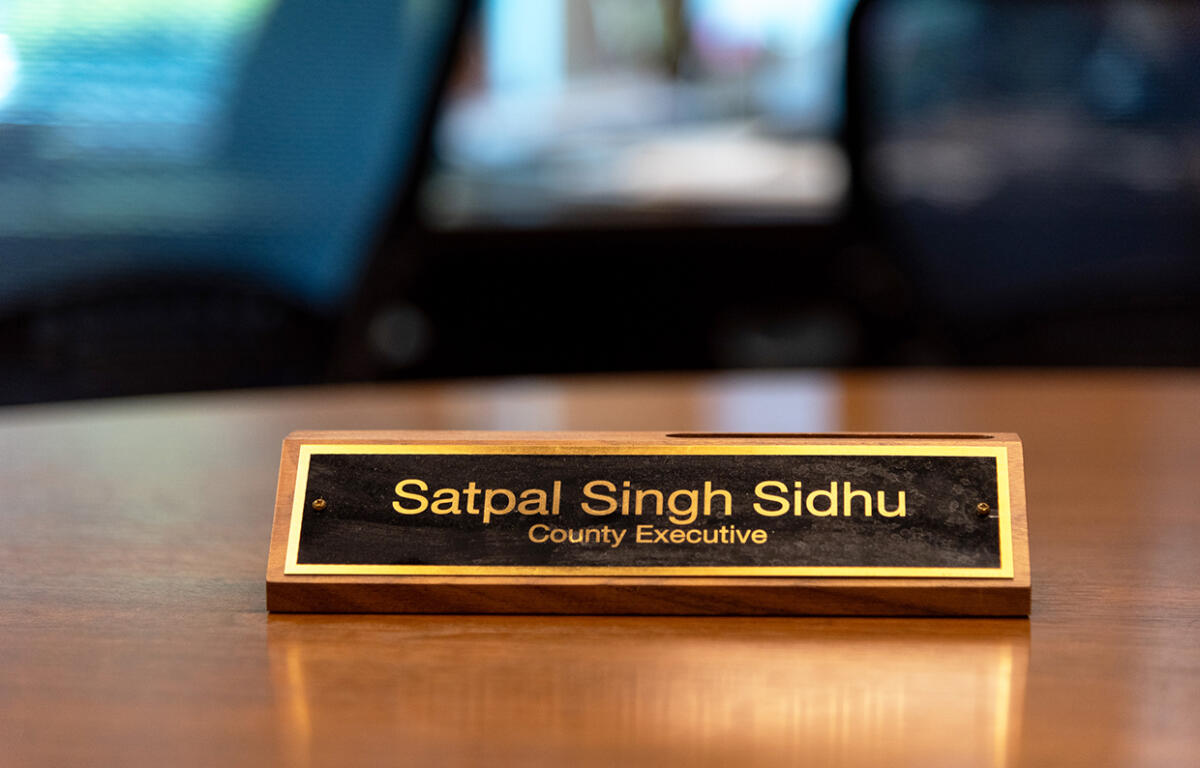

WHATCOM COUNTY, WA (MyBellinghamNow.com) – Whatcom County will be searching for a new top official next year as County Executive Satpal Sadhu announced that he won’t seek re-election in 2027 after two terms in the position. He’s guided the county through a whole host of challenges including the COVID-19 pandemic, two devastating floods, the ongoing opioid crisis and much more. His announcement comes as the county is finalizing its budget for the next two years with plenty of chances for public feedback coming up.
My Bellingham Now’s Jason Upton spoke with Sidhu to look back on his tenure, reflect on his accomplishments and challenges along the way and look ahead for some of the implications of this current budget process.
Some of this interview was removed for length and parts were edited for clarity. To listen to the full interview, visit our podcast page.
MBN: So start off by talking to us about this announcement that you won’t run for re-election next year. How did you come to that decision?
Sidhu: Well, it was not that difficult for me because I just turned 77 and I’ll be turning 78 when I reach the end of my term. I think that’s a long time. And I started the public service in 2015. So I think that’s a long time for any person to be in public service. And I would let some other younger people, people with different perspectives, to come and handle the county’s new challenges.
MBN: So you’ve been at the helm for so many major events, many of them were extremely difficult to navigate. What sticks out to you when you look back on your tenure and how the county has gotten through some of those challenges like the pandemic or these floods?
Sidhu: I think I can summarize all this in one simple liner: steadiness. These challenges come and when you run for election, you pick the topics, but after you’ve won, topics pick you. And this happens that whatever is in front of you is the most important decision you’ve got to make and what you think that you would like to do some things and changes, those take a secondary seat. The same thing happened with me.
I came on and actually in 2019, November, right after the election date, there were devastating floods and then one, two punch and then we had COVID. I was only two months on the job. I think the biggest thing I’d say is to be steady at the helm of affairs because whatever decisions are made by the top executive team impacts everybody. And if there is a panic in the room, then things go haywire. So I think I would just credit everything that the experience of many, many years working in industry business and dealing with life issues. I think that’s the biggest lesson I had and I think that is my biggest accomplishment. I kept an even hand and dealt with all the issues over seven years with this steadiness.
MBN: So how do you feel like the county has changed the most since you took over as executive? Is there anything in particular that you’ve really seen transform since 2019?
Sidhu: Oh yes, things like social media have a big presence and social media thrives on dividing people. We may not be that much divided. I had a plaque in my office when I got elected. It says we are far more united and have far more in common with each other than things that divide us.
Now, that’s not what social media and this instant answer, question, answer, expectations are making us even more divided. And don’t allow people to think through the issues, but be quick, jump to conclusions. I think that has more accentuated, has become more and more, which is unfortunate. That has changed and I think otherwise, the financial uncertainties have changed. I was on the council for five years and there were much better expectations or a much better sense of what is coming, but not in what has happened in the last four years.
The federal administration uncertainties, uncertainties of budgetary issues, have caused more pain to all the local governments. It’s not unique to Whatcom County. I think the local government, cities and counties face the brunt of all the social issues before it reaches the state or to the federal government. And I think that is much more represented in a more bold way in the last several years.
MBN: You mentioned this in a broader sense earlier, but what would you say are some of the biggest accomplishments within the county over your tenure? Is there anything you’re particularly proud of?
Sidhu: I’m particularly proud of many things and it’s never my accomplishment. I don’t believe in that. There’s one person who is the head. He gets all the credit. That’s not true. I know I will get all the blame being the head of the. any organization, which is fair. But I don’t take all the credit that it was me as a person who accomplished this thing. But I would say my team and all the department heads together, we have been able to achieve many things.
I have not really given too much thought to this so far, I thought I’ll wait till next year sometime close to my retirement to count what I accomplished or not, but definitely the jail issue was one of the biggest and prolonged issues for the last 20 years, the community could not come together on a decision. And we have undertaken the largest capital project in our county’s history. And at the same time, we are about to borrow our largest amount of debt for the history of the county. So these are significant events and we have been able to maintain our workforce, going through all the ups and downs of the budget and the level of service. So I think those are, to me, the major accomplishments.
MBN: When we look back on your tenure, it’s hard not to bring up some of the controversies. There was that Cascade PBS investigation in spring 2024 that exposed what looked to be a favorable letter of introduction you wrote for a former public works director who was facing allegations of sexual harassment by some female employees. The county council said it felt left in the dark by a lot of this. There was also the county’s former health director who had filed a tort claim against the county who specifically accused you of sexual discrimination and fostering a hostile work environment. Of course, these are allegations, but do you have any regrets about the way you’ve handled some of these situations? How do you look back on those incidents?
Sidhu: The first thing it says “investigation.” I don’t like that word. It was never hidden. There was nothing done in secret and put it in a vault that nobody can see. People had no interest and somebody wanted to interest and they didn’t have to go too far, make one phone call and get the information. So just calling it, oh, investigation and some undercovering or overcovering or finding is not the right word.
Whatever was done was done in an open manner and it was aware of the HR department and my staff and the people who needed to know knew about it. But the connotation that somehow there was some kind of controversy and things were hidden is not true. That’s the first thing I want to say.
Now, I make tens of decisions a day, which is hundreds of decisions in a month and probably thousands of decisions, small to big, in one year. That’s the nature of this job. And decisions are varied. The decisions are just putting up a stop sign at a crossing to all the way to approve the budget, which are running into hundreds of millions of dollars and everything in between. So in making those decisions, am I right all the time? No, I will never be right all the time. If my batting average is over 50, I’m doing really well compared to a lot of other things. So I take this in that stride. Yes, I made mistakes and I admitted to that, that it was an error of judgment, that I wrote that letter. But at the same time, a lot of people say, give people a second chance.
Who advocates for giving a chance? People who went to jail, they paid their dues to the society. We should rehabilitate. And at the same time, we say that we should not have any second chances for anybody. Yes, these matters are different. This matter, I take it very seriously of harassment and it should not be taken lightly. And I don’t think I have taken it lightly because when I was confronted with this thing, the very first day it came to light to my office and I had my director leave the office and not go back to his work. He was suspended immediately. Within the first five minutes of me knowing, I said, okay, you are going home, not going back to your office, and I need to learn more and investigate more, let the facts know, and then we’ll decide. And within a week, the person resigned.
I think the headlines and one-liners are the most popular thing for people and it has a life of one, two, three, five days and then the new headline comes in and people get glommed on to that and everybody forgets about that. I think it’s unfortunate but that’s how this media works and that’s how people have adopted themselves to work that way. It’s not healthy. It’s not healthy for our governance. It’s not healthy for our society. But that’s the way it is.
MBN: So you addressed the public works director. Is there anything you want to say on the former health director front?
Sidhu: I don’t think it had any substance. It didn’t have any substance. That’s all. But people can write a letter, go to a lawyer, pay him X dollars, and write whatever you want to write. But the proof is in the pudding, if somebody can prove that. I have hired several directors of major departments and most of them have been female. And I have met and that previous health director was a female and was hired by me and was promoted by me to bring about the change in the health department and recast the department, which was never recasted for the last 25 years. But people who are bitter and they want to say things, they’re most welcome to. It doesn’t change my attitude at all that somebody called me names or somebody blamed me for this, this, this. I stand proud of my character, my integrity, and my behavior with my colleagues and people I work with. I’m very proud of that.
MBN: You had mentioned earlier, the county is in the midst of its biggest project in county history with the new jail, the Behavioral Health Center and the accompanying projects for the Justice Project. How do you think things are going right now? The project has yet to break ground. A lot of the decisions have been nearly finalized in terms of the size and scope, the design process is underway with the jail. You did voice your frustrations with the county council earlier this year when it came to some of this decision making and finding that in between of the size of the jail and the behavioral health services associated with it. Where do you think we are here now in September 2026 ahead of its construction?
Sidhu: I think we are doing fine and I want everybody to realize when there are several different groups of people, community, decisions have to be done, it takes time. We have to bring along every different interest group and their wishes and how they perceive that this project should be. And this is not a project which is only in the hands of the council and the county executive. And that process and procedures are being met. And we have an approved budget. We are almost close to the design. We have the number of beds, almost a range of beds decided. We have decided that the behavioral care center will be a different location. And we made a big decision to move from La Bounty Drive to Hannegan Road. All these decisions have been made on the fly as we go along in the best interest of the project and best interest of the community. I think that the project is doing very well. It probably could have been a few months ahead, but I think we will end up finishing the project on time.
MBN: How do you think it’s going in terms of collaboration? We had heard some of the city mayors and some local law enforcement leaders say it felt like their voices weren’t being heard. Do you think the level of collaboration has gotten better throughout this process?
Sidhu: No, I think the level of cooperation has always been the same. The level of cooperation does not mean everybody just agrees to one thing. That’s not a level of cooperation, level of cooperation is that when people have the perspective to respect another person’s perspective and mayors had a perspective that we do not want small-sized jail so that there are booking restrictions. At the same time, the county council, Incarceration Prevention and Reduction Task Force and other community members wanted to divert more money towards the services.
Now, both pieces are necessary, but at the same time, everybody was making an argument for their point of view. So we’ve never lost the cooperation. We never had a confrontation. We just had a difference of opinion. And I commend the council for listening to both sides and making rational decisions. I think without the council’s decision nothing can move forward and I just want to give them all the credit that they were conscious of the different wishes of different groups of people and I think they made the right decision.
MBN: We’re in the home stretch of finalizing the 2027-28 biennium budget. You introduced your initial recommendations to the council earlier this month. It comes in the face of what’s expected to be a roughly $14 million shortfall by 2028. What’s important for people out there to realize about the budget we could see over the next two years?
Sidhu: I think people need to realize that the tax burden is high and the way our tax system for the local government revenue system is based on only two streams of revenue: sales tax and property tax. These are very regressive. There is a fundamental flaw in funding the local governments, which was a good system maybe 100, 150 years ago when everybody owned property, everybody worked locally, everybody earned their living locally and it was a balanced approach. But in 100-plus years, the whole society has changed.
Less than 2% of the people in our population work in agriculture or agrarian society, where agrarian society was like 80% of the economy in the past. And so the system has not changed with it. That’s the fundamental flaw. Now, what can we do? People need to realize that yes, it’s a difficult time, taxes are high, and they expect a level of service for the services from the local government.
So all I’m saying is that the council has taken some decisions to add some incremental taxes, which I don’t think they are very happy with, but they felt the necessity that if we don’t do that, it could spiral downward and actually cause more pain and harm to our society – to our community – in terms of services.
There are bad times ahead. I mean we as a nation, our priorities at the federal level are very different from the priorities at the local level. At the local level, we care about our daily services, our health, our roads and public safety. But there is no investment by the federal government in these things. The only investment they have done is cut, cut, cut. But they have the ambition to make wars, foreign wars. And I’m much below the pay grade to comment on that, but I think that impacts the local public. If we blow up a couple of hundred billion dollars in six months on some things which do not bring anything to local citizen services or make their life easier, what am I supposed to think? Where am I going to go get that money needed for local services?
So it’s something the public has to think deeply about and see how they can express themselves about this situation of diminishing services and increasing taxes. At the end of the day, I’m a citizen like everybody else. I pay the same taxes. I pay property taxes and other things, sales tax, everything else. I’m no different and so are the council members. So are the other people who work for the county. We are all citizens at the end of the day. And we all face all these hurdles and difficulties.
MBN: So to wrap up, what does the process for finalizing this budget look like from here and how can the community get involved and voice their opinion throughout that?
Sidhu: The budget is available digitally to anybody for the click of a computer click and they should study it, see how it is different from last year’s budget, and that’s also available. Compare and ask us tough questions.
The second thing is we are having an open house at the end of this month at the county courthouse. Please come. All the department heads, finance people, council members, myself, we’ll all be available for face-to-face meetings and answering questions. Please come and participate in that open house.
The other part is to write to your council members, write to your county executive, what do you think that we should change or we should cut or we should expand. I think those things do matter to us. We pay a lot of attention to the public’s views and how other people think about running this organization. And so that is the best way.
Now, the process is that starting Sept. 22, each department head will be offering their arguments or justifying their budget, why they did certain things and the reasoning behind it. They will be making their case to the council. And I think that is openly available to the public and they can even listen in online. I would like people to listen in. Come, attend and express yourself. And then, the council will weigh in after talking to all of the department heads and looking at the resources we have, they will make their final recommendations on what they feel like making any changes, if any. That’s the process.