


 Listen Live
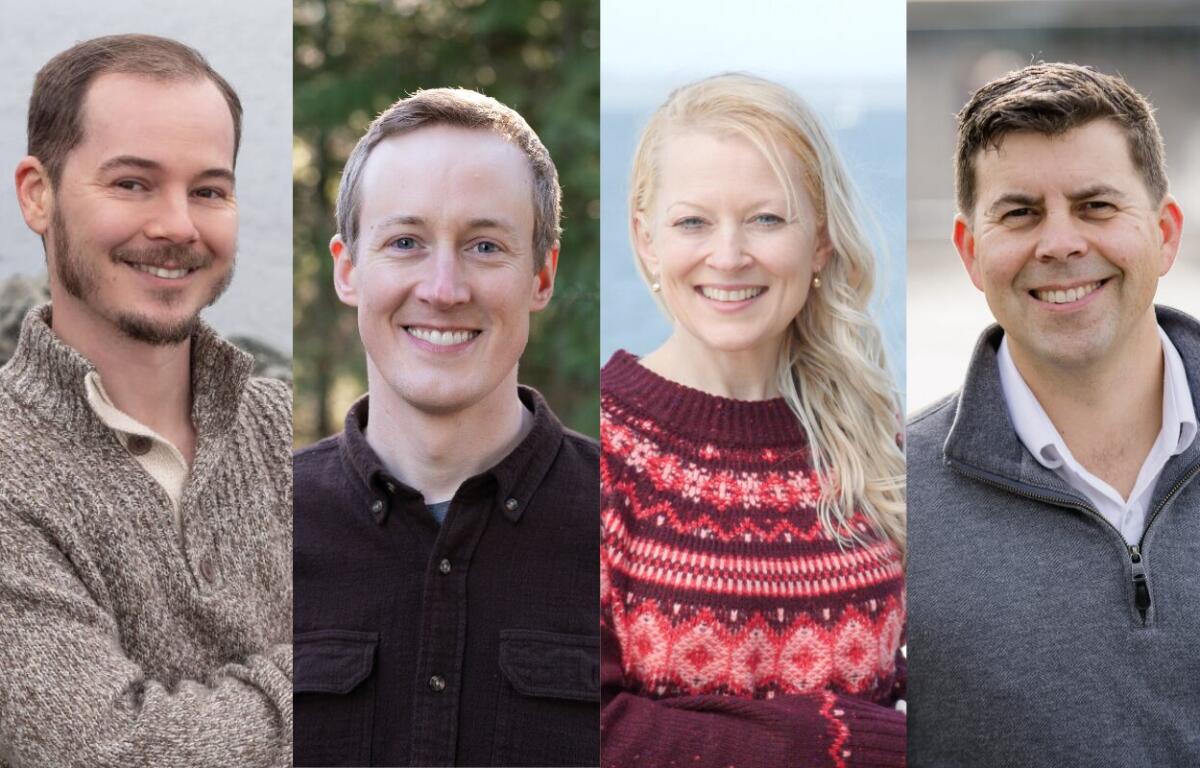

WHATCOM COUNTY, WA (MyBellinghamNow.com) – The 2026 Primary is here for Whatcom County. Ballots were mailed out Wednesday, July 15 and numerous races will be culled down for the region ahead of this November. Below are responses to questions sent to each candidate in the race for Washington state Senate, 42nd District. They have not been edited with the exception for typos and formatting reasons.
Ryan Bowman
I am a 42-year-old small business owner, caregiver, entrepreneur, and community advocate from Whatcom County. My professional background includes massage therapy, food service, caregiving, and running my own business, giving me firsthand experience with the challenges working families, seniors, and small businesses face every day.
What do you see yourself bringing to the office as an advantage over your opponents?
I am not coming from a political career or party structure. My advantage is that I am deeply connected to the realities people are living through—housing costs, caregiving responsibilities, healthcare access, education, wages, and economic insecurity. I am not beholden to corporate donors, party leadership, or special interests. My focus is on representing the people of the 42nd District and finding practical solutions that improve their quality of life.
What approach will you have as a leader?
I believe leadership begins with listening. I will prioritize transparency, accessibility, and collaboration. I want to bring together labor, business, environmental advocates, tribes, educators, healthcare professionals, and community members to find common-ground solutions. My role is not to dictate outcomes but to ensure the voices of constituents are heard and reflected in policy decisions.
What policies from prior leadership do you agree with? Which ones would you like to see changed?
Washington has made important progress in areas such as worker protections, environmental stewardship, healthcare access, and investments in education. I support continuing efforts that strengthen workers’ rights, protect natural resources, and expand opportunities for families.
At the same time, I believe we need to reassess policies that have contributed to housing affordability challenges, insufficient behavioral health infrastructure, and growing economic inequality. I would like to see greater investment in preventative services, workforce development, local food systems, and community-centered economic development that benefits residents rather than concentrating wealth and influence.
What public needs do you think need more attention that are currently underserved?
Behavioral health services, affordable housing, elder care, infrastructure maintenance, workforce development, and support for working families all deserve greater attention. I am particularly concerned about the growing strain on caregivers, seniors, and young people trying to establish themselves in our community. We need policies that strengthen economic security while preparing for future challenges such as climate resilience and population growth.
What do you feel is your largest challenge in winning this election?
Name recognition and resources. Traditional campaigns often rely heavily on fundraising, party infrastructure, and established political networks. My campaign is taking a different path by focusing on direct community engagement, conversations with voters, and grassroots outreach. Building awareness across the district without the advantages of a traditional campaign is my greatest challenge.
Without the backing of the two major parties, what will be the biggest challenge of running as one with No Party Preference?
The biggest challenge is overcoming the assumption that meaningful political change can only come through the existing party system. Running with No Party Preference means I do not have access to party funding, party endorsements, or party machinery. However, it also allows me to approach issues independently and evaluate policies based on their merits rather than party expectations. I see that independence as a strength, even though it makes the campaign more difficult.
My campaign is built around a simple idea: government works best when it listens to people before institutions, communities before corporations, and future generations before short-term interests. I am running to bring practical, people-centered leadership to Olympia and ensure the voices of everyday residents are represented in the decisions that shape our future.
Eamonn Collins
I’m a high school science teacher at the Lummi Nation School and the volunteer Vice President of the Kulshan Community Land Trust, a nonprofit that builds permanently affordable homes in Whatcom County. Before returning to the classroom, I spent several years as a policy adviser in the U.S. Senate and House of Representatives. I was elected to the 2025 Whatcom County Charter Review Commission. My wife Komal and I are raising our family in Bellingham.
What do you see yourself bringing to the office as an advantage over your opponents?
I bring a unique combination of high-level policy expertise and direct, on-the-ground experience with the issues people are struggling with most. I’ve spent most of my career in classrooms with our most vulnerable students in historically marginalized communities, and every day I see how our policies are failing working families. Through my work with the Kulshan Community Land Trust, I’ve been at the table as we struggled to stack subsidies, navigate overly restrictive requirements, and make budgets work for affordable housing projects, so I understand exactly where we need legislative fixes. And from my years on federal legislative staff, I know how to write and negotiate bills and manage the committee process to get legislation across the finish line.
What approach will you have as a leader?
I’m not interested in being just another yes vote for the Democratic caucus. I’ll be focused every day on making material improvements in the lives of people here in Whatcom County. I’m tired of constantly being told we can’t do things. We can, if the people in the room decide to. Voters elect us to solve problems, and if we can’t do that, we’re failing our fundamental duty.
On the Charter Review Commission, I co-sponsored two amendments with Democrats and Republicans — good-government reforms on budget transparency and nonpartisan redistricting — that voters overwhelmingly passed. When I knock on doors and talk with more conservative neighbors, the distance between us is usually about labels and framing; once we’re talking about our underlying values and actual experiences with housing costs or healthcare, there’s a lot of agreement. Connecting as neighbors and getting past surface-level disagreement is where progress starts.
What policies from prior leadership do you agree with? Which ones would you like to see changed?
Washington has made historic progress that I’ll defend: beginning to rebalance our lopsided tax system with the capital gains tax and the new Millionaires Tax, supporting families through Paid Family and Medical Leave, protecting our most vulnerable neighbors through the Keep Washington Working Act, and recent reforms removing outdated zoning barriers to building homes.
What needs to change is the pace and scale of our policy response to the overlapping challenges we face. On housing, removing zoning barriers is sensible, but the market is not going to over-build itself into affordability; we need dedicated progressive funding for the Housing Trust Fund to scale permanently affordable homes. Renters need stronger protection from steep rent increases and junk fees. And our tax code is still one of the most regressive in the nation, asking the most from middle and lower-income residents. I’ll push to rebalance our taxes so the ultra-wealthy pay their fair share while reducing sales tax that consumers feel every time they make an essential purchase like prepared food or shoes for their kids.
What public needs do you think need more attention that are currently underserved?
Housing: Olympia provides a very limited set of tools to make housing more affordable, leaving cities and small nonprofits to solve this crisis. The state can act bigger and faster, leveraging its regulatory authority, and growing the Housing Trust Fund while removing unnecessary restrictions and reporting requirements that limit new affordable housing development.
Childcare and early learning: There is no single public investment with a higher return than high-quality early childhood education, yet childcare costs families in Whatcom County what amounts to a second mortgage while providers earn poverty wages.
State-level resilience: Federal programs, protections, and funding that we have relied on are being eliminated. We have to backfill gaps at the state level and put up legal firewalls to protect Washington from federal overreach into our schools, our healthcare, our law enforcement and private data.
What do you feel is your largest challenge in winning this election?
The 42nd is a genuinely competitive district that requires speaking to both urban Bellingham and the rural communities of North and East Whatcom County, and doing that means direct voter contact at a scale that’s demanding for any grassroots campaign. We’ve built the financial and volunteer momentum to reach voters that establishment campaigns take for granted.
As one of multiple Democrats in this race, how do you distinguish yourself from other candidates?
My professional experience, my sense of urgency, and my independence from current leadership distinguish me from my opponents. I’m the only candidate in this race currently working in the classroom, where I see every day the challenges working people face in our community. I have direct experience overcoming financial and regulatory hurdles to build affordable housing, and I have written and negotiated legislation. I’m proud to have earned the sole endorsement of the local Democratic Party — people who have seen my advocacy up close and who, like all of us, are frustrated by leadership moving too slowly to meet these challenges.
Democrats have to do more than react defensively — we have to put forward policies that deliver material improvements in the lives of working families who are struggling every day. Voters here are looking for new voices to represent them, not candidates who will maintain the status quo.
Erika Creydt
My academic and professional background is rooted in understanding people, families, and the systems that shape their lives. I earned a Bachelor of Arts in Philosophy and Psychology from California Lutheran University in Thousand Oaks, California, followed by a Master of Arts in Marriage and Family Therapy and a Doctorate in Clinical Psychology from the Adler School of Professional Psychology in Chicago. I also served as an adjunct faculty professor at Adler’s Vancouver campus, where I supervised graduate-level thesis projects and taught future therapists in marriage and family therapy.
What do you see yourself bringing to the office as an advantage over your opponents?
I bring a practical, grounded perspective to the 42nd District Senate race. As a business owner, I understand what it takes to build operating budgets, make responsible financial decisions, and keep organizations running successfully.
My background as a doctor of clinical psychology has also shaped the way I approach leadership. My work requires listening carefully, understanding different perspectives, and helping people find workable solutions that produce progress.
I am also a mother of three, and I understand firsthand the pressures facing working families in Whatcom County. Childcare, groceries, gas, healthcare, and basic necessities have become increasingly difficult for many families to afford. Parents are making hard choices every day, and too often our systems do not reflect the realities of working mothers, single parents, or families trying to stay afloat.
The advantage I bring is a balanced approach. I believe we need policies that support families, small businesses, and everyday people across our community that are grounded in real life, not political ideology.
What approach will you have as a leader?
I believe good leadership starts with listening. I want to hear directly from constituents, understand their concerns, and consider how decisions made in Olympia are affecting people in their daily lives. I am someone who values facts, transparency, and practical problem-solving.
One of the reasons I decided to run for Senate is that I believe some policies may have been well-intended, but are not working as they should. When that happens, leaders have a responsibility to acknowledge it, be honest about the results, and work to fix it. As a State
Senator, my approach to leadership will be grounded in accessibility. I will be available and engaged with our community. Commitment to accountability of our tax dollars is critical. Are they producing their intended results? This is something I have frequently asked being on the Blaine School Board where I oversee a budget of 40 Million dollars. As a public servant my job is to represent the people of Whatcom County’s 42nd District not a political party or a political agenda.
What policies from prior leadership do you agree with? Which ones would you like to see changed?
I agree with some of Senator Sharon Shewmake’s capital-budget and transportation budget investments that included funding for the Lummi Nation Substance Abuse Treatment Facility, the Whatcom County Crisis Relief Center, $10 million for the “Floodplains That Work” program on the Nooksack, roughly $13 million for riparian acquisition and restoration on the Nooksack, funding for the Whatcom Agricultural Research Center in Lynden and Ejidos Community Farm in Everson, money for Sumas water infrastructure, and transportation funding for a safer I-5/Slater Road interchange, elevated flood evacuation routes, and bicycle-pedestrian safety around Lynden High School.
There are several votes Senator Shewmake has taken that reflect a broader pattern of making life more expensive for families in Whatcom County, including legislation affecting property taxes, transportation revenue, fuel compliance costs, prescription drug taxation, and insurer taxes. At a time when families are already struggling with groceries, gas, housing, health care, and basic necessities, I do not believe Olympia should keep adding costs and then act surprised when families cannot keep up.
I am especially concerned about votes that affect access to care. When the state adds costs to the prescription drug supply chain or increases tax and regulatory burdens connected to health coverage, those costs do not disappear. Too often, they are passed along to patients, families, employers, and providers.
What public needs do you think need more attention that are currently underserved?
One of the primary reasons I decided to run for State Senate is because I continue to see bureaucratic barriers preventing locals from accessing the mental health care they need. Mental health care is a crisis facing Whatcom County.
Our schools also need a funding system that reflects the actual cost of educating students. Enrichment levies were intended to support programs beyond basic education, yet many districts rely on levy dollars to cover basic operations, as state funding does not fully meet the needs. In many communities, levy dollars help support counselors, nurses, special education services, school safety, technology, transportation, extracurricular activities, and additional classroom staff. These are services that should be addressed through a reliable state funding formula not levies.
Water quality, water supply, and water management are also critical issues that deserve more attention and action. Whatcom County needs infrastructure investments that protect communities from recurring winter flooding while also helping ensure reliable water access during summer drought conditions.
What do you feel is your largest challenge in winning this election?
I’ve knocked on thousands of doors and people care deeply about their families, their schools, their safety, their businesses, and their cost of living. The challenge is reaching voters who feel frustrated with politics and are not sure their participation still makes a difference.
Many people feel like Olympia is disconnected from their daily lives and decisions are made without listening to the people who are most affected by them.
In many ways, my campaign has been about reminding people that their voice does matter, sitting out only gives more power to systems that aren’t working. We have a choice and we can make a difference, but we have to get out and help.
With the district historically leaning more blue, how do you plan to get enough votes to make it to Olympia?
Not all voters are locked into party labels. There are Republicans, Independents, and Democrats who are frustrated voters across our district who want a more balanced approach. Everyone wants our district to be a good place to live.
The majority of people I talk with care less about partisan politics and more about whether they can afford gas, housing, groceries, childcare, and health care. This race is about who will best represent Whatcom County residents and help shape policies to make life more affordable and prosperous.
I bring real-world experience, leadership skills, and a commitment to developing the collaborative solutions we need to solve our problems.
Michael Alvarez Shepard
I am a long-time Bellingham resident, where I have been lucky enough to have raised two children alongside my wife, who is a local school principal in our community. I am a Senior Instructor at Western Washington University, and an elected three-term Commissioner at the Port of Bellingham, where I have worked to advance our community’s economic future.
What do you see yourself bringing to the office as an advantage over your opponents?
In my time as Port Commissioner, I have gained hands-on experience with many of our most pressing issues in Whatcom County, especially housing and economic development. There are other candidates who talk about the challenge of creating affordable housing, but I have actually done so. At the Port, I have secured the construction of nearly 200 units of affordable housing, including much needed permanently affordable family housing with onsite childcare. We know Whatcom County is a great place to live, but it has become a hard place to afford. There are few legislators in Olympia with direct experience in effective and sustainable economic development. I would bring nine years of experience working to create, retain, and expand family-wage jobs in Whatcom County. I want to bring that practical experience to Olympia.
What approach will you have as a leader?
I will be responsive and highly-engaged. We have made a lot of progress in Washington, but there is a lot of work to be done. As a legislator, I will represent my community’s interests fervently, and bring the collaborative approach I developed as Port Commissioner to the State Senate to get things done on our most important issues.
What policies from prior leadership do you agree with? Which ones would you like to see changed?
We have made important progress in recent years to stand up to federal overreach, develop impactful climate action policies, invest in mass transit, and implement policies to increase housing density. However, there is much to be done on the affordability issue. We need to rapidly increase the supply of affordable housing, expand access to and affordability of health care, fully fund K-12 education, and ensure that we deliver a diversity of living-wage jobs in our communities. The state legislature has not adequately funded K-12 education for the past ten years, and it shows in the lack of basic services our schools operate with. We have not streamlined permitting for projects that clearly meet our community’s needs and values, like more affordable housing and clean energy production.
What public needs do you think need more attention that are currently underserved?
Housing, healthcare, and education are the three issues I hear about most consistently when I am speaking with community members. There is no one solution to affordable housing, but we need to continue to invest in solutions that create more abundant and affordable housing. Quality, affordable housing is something that all people in Washington should have. We need a healthcare system that is more affordable and more accessible for residents. Finally, our kids deserve an education system that is funded to enable the academic success of every student.
What do you feel is your largest challenge in winning this election?
I sense that voters are increasingly frustrated with our political systems, stretching from the local to the federal level. Residents are sick of federal overreach and dismayed at the fraying of our institutions. Many feel increasingly pessimistic and people are concerned that the federal government will interfere in our local elections. I believe the biggest challenge this year is engaging voters on key issues to inspire hope and turn apathy into action. I hope to do that through a robust, highly-engaged campaign that goes door-to-door across Whatcom County to meet voters where they are. I love doorbelling, and it is the most significant way to connect with community members.
As one of multiple Democrats in this race, how do you distinguish yourself from other candidates?
I offer two distinct qualities that separate me as a candidate: experience and electability. I have won three county-wide elections in the last 8 years. I know what it takes to win an election against quality Republican candidates in this highly competitive district. I have hands-on experience with many of the issues facing our community. While others may talk about the need for solutions, I have a track record of implementing them.
Affordability is the number one issue I am hearing about from voters. I have directly implemented affordable housing, expansion of childcare, and investment in county-wide economic development. I want to bring my experience at the Port to Olympia, and implement real solutions to address our cost of living crisis.
My Bellingham Now is committed to providing equal opportunities to candidates in the Whatcom County region. This is part of a series of emailed questionnaires our team sent to candidates in elections likely to see eliminations in the 2026 Primary. Read responses from candidates in the following races: