


 Listen Live
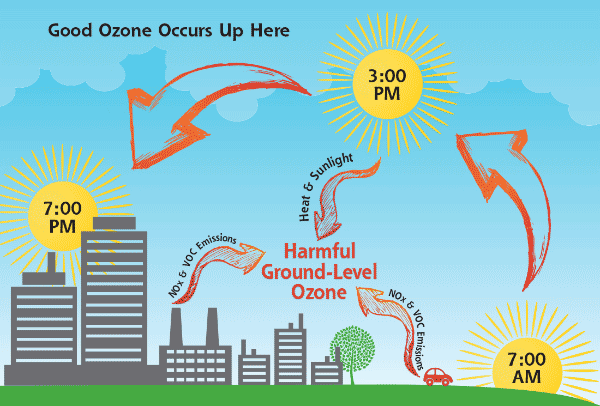

WHATCOM COUNTY, WA (MyBellinghamNow.com) – As summer temperatures heat up across northwest Washington, so does the potential risk of increased levels of ground-level ozone — a harmful air pollutant that forms when sunlight and heat interact with emissions from vehicles, industrial facilities and common household products.
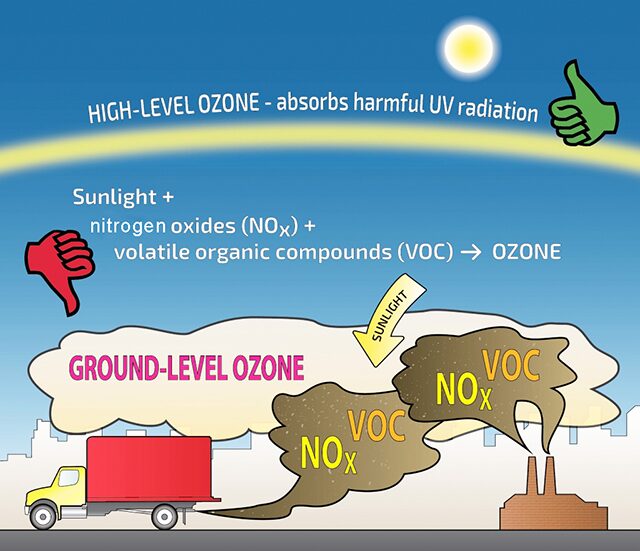
Unlike the ozone layer high up in the atmosphere, which protects us from the Sun’s harmful ultraviolet (UV rays), ground-level ozone forms near the Earth’s surface, where people breathe.
Ground-level ozone is created when nitrogen oxides (NOx) and volatile organic compounds (VOCs) react with sunlight and heat. These pollutants come from a variety of sources, including car exhaust, lawn and garden equipment, gas-powered tools, paints and solvents. During hot, sunny days–especially when there isn’t much air movement to disperse pollutants–ozone levels can quickly rise to unhealthy levels, even in rural or coastal areas.
Breathing in ozone can cause a range of health problems, especially for children, older adults and people with respiratory conditions like asthma, bronchitis or COPD. Short-term exposure can lead to coughing, throat irritation, chest tightness and shortness of breath. Long-term or repeated exposure may lead to reduced lung function or increase the risk of respiratory infections.
To help reduce ozone pollution and protect your health, consider taking the following steps, especially on days when air quality alerts are in effect:
- Limit driving when possible. Combine errands, carpool, use public transit, or bike and walk when it’s safe to do so.
- Avoid using gas-powered lawn equipment during the hottest part of the day. Try mowing or trimming early in the morning or in the evening when it’s cooler.
- Delay painting or using solvents, degreasers, and aerosol sprays until cooler hours. These products release VOCs that contribute to ozone formation.
- Refuel vehicles after sunset. Gasoline vapors are more likely to contribute to ozone formation in the heat of the day.
- Keep up with car maintenance. Well-maintained engines and emissions systems produce fewer pollutants.
Being aware of air quality conditions is an important part of staying safe during the summer. You can check current air quality and get forecasts by visiting the Northwest Clean Air Agency’s Air Quality Center.
By making small changes to your daily habits during hot, sunny weather, you can help reduce ozone pollution and protect both your health and the environment. We can all do our part!