


 Listen Live
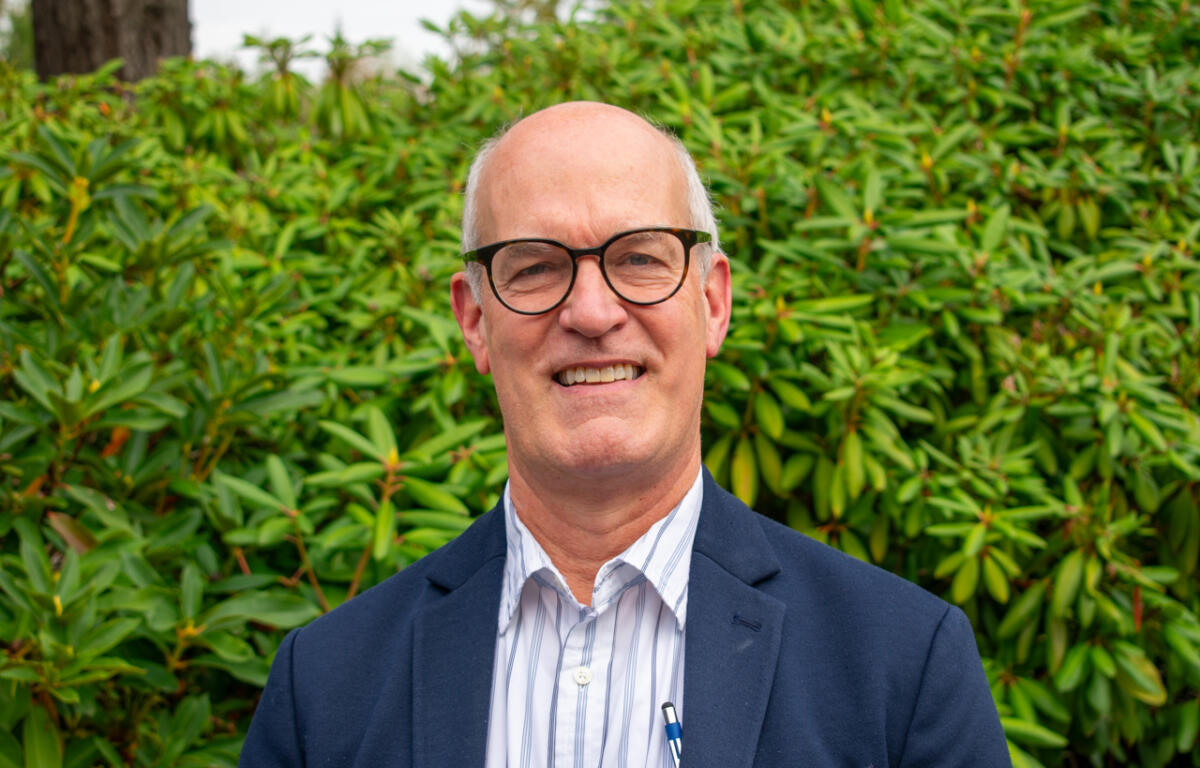

WHATCOM COUNTY, WA (MyBellinghamNow.com) – U.S. Rep. Rick Larsen, Democrat, is defending his seat as congressperson representing the 2nd district for Washington, running against Republican Edwin Feller. If re-elected, this would be Larsen’s fourteenth term in the House. My Bellingham Now’s Dianna Hawryluk and Jason Upton interviewed Larsen ahead of this November election.
You can listen to the full audio below:
Editor’s note: This interview was not edited for length or clarity.
DH: So it’s safe to say there’s been a lot of tensions over at the Capitol level, the Washington DC level, especially when it comes to members of Congress and view yourself being a longtime member of Congress. How would you describe the current temperature of that environment, especially in the house right now?
RL: Well, you can take it two ways. It’s extremely cold and frigid. or it’s extremely hot. It’s I think the same result either way when you look at it.
I think the partisanship is pretty intense right now and that happens during an election season, not the entire election year, but as it gets closer to an election. Congress is out of session now. Everyone is back home either campaigning or and, like I am, both campaigning and doing my work. And so you see, we haven’t been together for a while, but it’ll be telling when we get back in session on Nov. 9 after the election, the outcome of the election will kind of dictate the next six weeks of work and how we get along.
I do think that people are pretty generally tired of partisanship, and I have a committee that I’m on, transportation committee, where we try to be a little bit of an island of partnership in the sea of partisanship. and hope to be able to continue that next year.
DH: Fantastic. Now, in your time, you’ve been a congressperson for well over two decades at this point. Have you seen anything of this magnitude happen during your time serving in office?
RL: It’s worse than it has been. I’ve seen times of very intense bipartisanship or nonpartisanship. Usually it takes a disaster for that to happen. Even at the beginning of COVID, people were getting along. At the beginning of the Great Recession, folks were getting along. It didn’t last very long. After 9-11, there was a lot of willingness to work together. That splintered over time as well.
I don’t think it’s a surprise that Democrats and Republicans have different views of how to get to the same result and have a country that is great, that we’re creating jobs, that people feel safe. a variety of other things, but we have different ways to get there. And so there’s legitimate debates to have about that. I think where Congress, members of Congress get lost is thinking that debate equals yelling as opposed to debate means I disagree with you. Is there some way we can figure this thing out? And that’s how most people live their lives. They expect the same amount of members of Congress.
JU: So you talk about this need for bipartisan cooperation. In recent years, how have you worked across the aisle? Are there any certain policies or bits of legislation you can point to? Even anything coming up you think that could work to unite both sides?
RL: Yes, I think on the Transportation Committee, We are a bit spoiled in that regard because when you’re building or repairing the next generation of infrastructure, it’s hard to do that in a partisan way, honestly. So as we are moving forward to try to do the next five-year bill for roads, bridges, highways, transit, we have some disagreements. Democrats, Republicans have some disagreements on the edges, but not on the main goal.
Another example is in a very non-partisan way, we passed something called the Alert Act out of the House, the Rotor Act out of the Senate. This is an aviation safety bill to respond to that tragic crash between an airplane and helicopter at DCA last January. And we’re very close to getting that done as well. We have a pipeline safety bill that we’re very close to getting done, Senate and House getting that done.
So again, when you’re building next generation infrastructure, when you’re focused on the safety of the traveling public, In our committee, that’s our focus. So we can work together. I have examples of working together with Democrats and Republicans to make things happen. But there are some differences.
As I said, I want to see us re-up the health care tax credits, the premium tax credits that the Republicans put a stop to. I want to see us reverse a lot of these cuts that we made to Medicaid, which funds Apple Health in our state. And we have thousands of people who are losing coverage.
I don’t think that we should be using artificial intelligence tools in order to make healthcare coverage decisions like this administration wants to do. And I disagree with them. I think that’s a reasonable place to disagree with them. So you can’t have bipartisanship for the sake of it. You still have to decide what is the right outcome. And then again, you should be able to debate those things reasonably. without too much rancor. I think that there’s a lot of factors that play into giving members an incentive to go the rancor route, if you will.
DH: There we go. You covered a lot of ground over there. I wanted to hone in a little bit on affordability, folks being able to just get through the day-to-day, being able to afford groceries, gas, just being able to survive a basic life. And the president has repeatedly said, ‘oh, affordability is some sort of made-up word here, there, and whatever.’ But I think coming from folks on the that’s simply not true. So what is your take on any sort of measures that you would like to see implemented to ease the affordability crisis that we’re all dealing with right now?
RL: Yeah, I’ll just address the rhetoric first about the president saying affordability is a made-up word. I’ve heard that on the campaign trail from some people who probably aren’t voting for me anyway. I can assure everyone affordability has been in the dictionary for a long, long time. If you look it up in Merriam-Webster ‘s, I’m sure it’s been there for a long time.
More importantly, what people feel right now is an affordability crisis is just another way of saying prices are going up and they’re getting no help. And that is what is happening. So we see on tariffs keeping the cost of basic goods stickily high. We see this trade war resulted in fewer Canadians coming down, hurting small businesses who still have to pay for their cost of doing business but not getting the revenue needed.
We see gas prices going up 50% since Jan. 20, not since the war in Iran started, but since Jan. 20, 2025, since inauguration day. And the president promised lower prices and no war, we have higher prices and more war. And getting gas prices down has to start with stopping the war in Iran. And it doesn’t mean they’re going to come tumbling down, but you need to stabilize that global market so that retailers can make better, more reasonable choices about what the price of gas is they’re going to charge. And I mentioned healthcare costs as well. And that’s another area where people really feeling the cost crunch.
DH: The pinch for sure. Now on the note of rhetoric and oil prices, the president has also been in recent days going after Ukraine, blaming them for the reason that diesel and gas prices have been through the roof. And you just made a face like you just ate a sour lemon. So I’m just going to let you take the reins on that one.
RL: Yeah, you know, I have a great face for radio and thanks for pointing that out. I appreciate it because when I hear this idea that somehow Ukraine is responsible for gas prices.
Let’s go back to the original sin here. Russia invaded Ukraine. Ukraine has a right to defend itself from an illegal invasion, and that is what they’re doing. So when Ukraine is launching attacks against Russian oil refineries, that is the war equivalent of Russia attacking Ukraine’s energy infrastructure. So this is a product of the war in Ukraine, which is started by Russia.
Now, the president wants to and has eased sanctions on the purchase of Russian diesel fuel providing millions of dollars, therefore, to the Russian war machine so it can continue its war in Ukraine for the potential of bringing the price of diesel down in the United States. And there’s a lot of doubt, one, if it’s going to bring diesel prices down enough for anyone to care. And second, there’s huge bipartisan backlash, including from me, about giving, allowing Russia to sell its diesel on the international market in violation of sanctions that we used to have, which is going to give Putin millions of dollars in order to continue his war in Ukraine. This is all backwards. We need to stand with Ukrainians and stand with Ukraine.
JU: On the topic of international relations, relations between U.S. and Canada have been a big thing recently. And specifically here in the 2nd Congressional District, I’m sure you’re very aware of some of these cross-border communities. Blaine, Sumas, have been hit really hard by a drop in Canadian visitors, a drop in Canadian shoppers, and the effects that’s having on their local economies. You know, what opportunities are there to improve those relations with Canada, and how do you think we can do that moving forward?
RL: First let’s start by talking about a town like Blaine that has been severely impacted by the trade war. Canadians are making a choice and that choice is they’re staying home. They’re staying on their side of the border. And if you talk to Canadians, they’ll say it’s not you, it’s him. That is, it’s not Americans, it’s Trump and his policies.
And that’s negatively, has a huge negative impact on Blaine. So what Blaine is doing, I just talked to the leadership of Blaine last week about this, they’ve decided like we need to figure out what we can do to make Blaine more sustainable, more competitive as an economy and not cut all the ties to Canadian reliance, on Canadian shoppers, but do more to increase Blaine’s attractiveness to everybody else. And it’s a long-term thing. That’s why they’re looking at, was at the Port of Bellingham as well, to look at the redevelopment of Blaine Harbor, which is going to be an important part of that. So that’s first.
The second, though, is this bigger picture about the U.S.-Canada relations. And I think that first is to realize at some point, Trump will be gone and Canadians will have to make a different choice at some point, whether or not to come down. Second, though, is understanding that we do have a long-term relationship. The U.S. and Canada do have long-term trade relationships, other economic relationships, a defense relationship through NATO, as well as a bipartisan or a binational relationship with NORAD, the North American defense system.
So there are foundational things that we can rest upon in order to rebuild a relationship with Canada and vice versa. I do think when Prime Minister Carney, the Prime Minister of Canada, says that things have fundamentally changed, I think he’s right. But fundamentally change does not mean we are never going to ever again be partners on anything. That’s different. It’s just going to be, I think Canada will think itself in a stronger position relative to the relationship with the U.S.
So, and it’s a long answer, but this requires a lot more thought. But one is understanding we have a foundation. Second is, okay, where do you start from there? I do think that re-upping the USMCA, the U.S.-Canada-Mexico Free Trade Agreement, those negotiations, so that we’re starting to exercise those, you know, trade muscles again, trade negotiation muscles again. I do think that there’s a defense relationship that’s important for the North American continent that U.S. and Canada can be both a part of and that there are some openings there. So again, you’re creating these better relationships, longer term relationships. That’s where I would start, with that kind of plan. But this is not going to, you know, Rome will not be rebuilt in a day. There’s been some fundamental challenges in this relationship over the last year and a half. And it’s going to take a while to rebuild those.
DH: There we go. And on that note, we just wanted to talk real quick on some legislature that you introduced a little bit earlier this year regarding our exclave Point Roberts. Not a lot of places in the US can say they are home to an exclave, but here in District 2, we do have Point Roberts and great little place over there. And if this legislation makes it all the way through, what sort of benefit would it have for the folks living on Point Roberts in the future?
RL: Yeah, Point Roberts is one of three exclaves in the United States. There’s Northwest Anglin, MN, and Hyder, AK as well. And what the purpose of the legislation is a requirement that federal agencies, when they make decisions that impact these exclaves, have to have a, have to, they’re required to have a consultation process with those communities to understand the impacts.
We had this example of, it might have been last year, it might have been two years ago, I forget, but it was U.S. Department of Agriculture made this decision about transporting dogs across the border. And it was a legitimate reason to do that. They wanted to be sure rabies wasn’t being transported into the US by dogs owned by Canadians coming to the United States. Very legit, but they didn’t think about the fact that you’ve got Americans living in Point Roberts who might be traveling through Canada into the United States with their dogs. And they are not Canadians, they’re Americans, and they’re making this trip.
So we had to intervene. I mean, it was like several months of work between the USDA, the Customs Border Protection folks, some White House got involved just to get everyone to understand, like, what are we trying to do? What isn’t trying to be done? How can we do this better to achieve the same goal without the administrative burden on folks in Port Roberts? So those kinds of things need to be, agencies need to be thinking about. And so it’s a little piece. It’s not, you know, it’s not going to save the world. world, but we’re trying to make it easier on the folks at Point Roberts instead of easier on the federal bureaucrats.
JU: Speaking about immigration, how would you evaluate the effectiveness of the current federal stance on that? How do you see it affecting people in our neck of the woods here in the second congressional state?
RL: Any sort of passage grade to immigration. This administration isn’t just against illegal immigration. They’re against legal immigration. Proven by any number of arrests made by the ICE agents have made throughout the country of folks who are in the country legally awaiting things like an asylum decision. You are allowed to stay in the United States. if you’re awaiting an asylum decision. The government has said you can, but because you don’t have a legal document, they’re arresting those folks.
I saw a case of this yesterday in Mill Creek, WA, where a gentleman from Columbia is there and was arrested by ICE, and he’s an asylee applicant, but he doesn’t have any criminal record at all. And so this is the kind of thing when I say they don’t even like legal immigration, that’s an example of that.
So look, we need an immigration system that’s more humane. We need one that has legal pathways and more legal pathways for people to take. Not illegal ones, but legal ones. And that requires investments in immigration courts. It requires that folks who are applying understand their rights, that they do have rights when they apply and are working their way through immigration courts. We need an investment. in an immigration system that recognizes folks who are in the United States, who are paying taxes, who are attending church, who are active in local ball teams, or kids are in local ball teams, that those folks, so long as they are doing everything right, will have an opportunity to apply for a legal status. And we don’t have that right now at all. And that undermines jobs. And here in the northwest, when you look at our agricultural economy, it undermines jobs in retail and the service industry here in our local economy as well.
So we have a long way to go to get this right, to get immigration right. And we’ve had three opportunities since I’ve been in Congress to pass immigration reform, and they’ve all failed for three different reasons. And this, but this administration is not interested in an immigration reform bill. They’re hardly interested in investing in border security. They’re strictly interested in deportation, which is not, it’s not just not an immigration policy. It’s inhumane. And some of these deportations are, the courts have found are illegal. So this administration’s also breaking the law, not in every case. but in a lot of cases because they don’t bother to care to check.
DH: There it is. And I know you recently toured the Homeland Security facility that is in Ferndale fairly recently, at least twice, I believe, over the past year, in fact. Have you had a chance to go to the ICE facility in Tacoma? And if so, what were your takeaways from your experience going through both of those facilities?
RL: I’ve been through the ERO facility in Ferndale. I’ve been through the Homeland Security Investigations Facility in Ferndale, and I’ve been through the Tacoma Detention Facility down in Tacoma as well. I think the first thing to think about is the Homeland Security Investigations Facility is kind of a pass-through facility.
HSI is a criminal investigation service of Homeland Security. So they’re doing criminal investigations at times that can also be related to immigration, but it’s also they also do child exploitation cases. They do drug smuggling cases, human trafficking cases, financial money laundering cases. They do a variety of things. And so their detention facility, if you will, they’re holding facility. They have three small cells that hold, you know, two people comfortably. But they also get those folks out and in the hands of U.S. Marshals who then take them to Seattle for arraignment because these are criminal cases that come out of HSI.
ERO, totally different operation because that’s a civil, that’s where the civil administrative warrants, administrative arrest for immigration law. And that’s really been the focus of the angst of largely the focus of the angst in the Pacific Northwest. And then the detention facility I was down there last year to visit with Lelo Juarez, who was kind of the first person in my district since Trump was elected or became president in January 2025, kind of the first person to sort of be in the news and had a chance to sit with Lelo. And he’s still in contact with the office as well. He’s in Mexico and trying to find a way to legally get back in the U.S.
But it was down there and that facility is like, that is what people think of when they think of a detention facility. It’s nothing like the HSI facility. It’s nothing like the ERO facility. The detention facility is, you know, 1,500 to 2,000 people in detention. Many of them going through some sort of immigration adjudication to the courts. But also, this is where the, we have concerns about food quality, about humane conditions, about access to access to the courts, access to legal representation. That is a lot of that focuses, a lot of the focus on immigration policy and what ICE is doing is rightfully on the operations of the detention facility in Tacoma. And so I’ve been, you know, along with my colleagues, have been been struggling to get the administration to pay attention to these conditions in there. But this administration is not interested, like I said, they’re not interested in humane immigration policy.
But we’ll keep trying as well. And I said the second thing I want to say about that is now the administration is looking at itself taking over the operations directly of that facility. So removing it from private sector to the federal government in hopes that they can avoid that as the administration can avoid any sort of state regulation of that facility, especially when it comes to health, quality of health of the folks there and a variety of things. So we’re continuing to watch this very closely. I’m not trying to excuse any ERO facility or the HSI facility or anything like that. I’m not trying to excuse that. I think folks have been fairly open to me who work there. But that doesn’t excuse the Trump administration policies at all.
JU: So you’re seeking another term after serving for over 2 decades in Congress. Why should people vote for you again? What can you point to is, ‘I’ve really affected the lives of people around here.’? And is there any, specific policy error where you’re like, ‘I feel like I need to make more progress on this.’?
RL: Yeah, there’s anybody who’s in Congress or anybody who’s running will say there needs to be progress on name it. And so I’m on the Transportation Committee and if Democrats get the majority, I’ll be the chair of the Transportation Committee in the U.S. House of Representatives giving me even more impact on the role of roads, bridges and highways of our marine construction and shipyards here in the Pacific Northwest. And I think if I was to look at what more needs to get done, there is work to be done. I know that the support, the Port of Bellingham and its efforts to not just redevelop Blaine Harbor, but the Bellingham Waterfront being part of a marine highway system that creates jobs here in the Northwest.
There’s the issue of Whatcom transit wants to continue its efforts to transition to cleaner buses, and I can help them do that through oversight on this committee through funding through the Federal Transit Administration. And I think when I look at the work I’m doing on the environment, we have the Water Resources Development Act, which basically funds the corps of engineers and its work. But it’s not just dredging that they do in the waterways. They have ecosystem restoration. They have a variety of things that can help our environment be more resilient when it comes to climate change. And a lot of these projects aren’t defined by Rick Larsen, member of Congress, because it’d be foolish for a member of Congress to go into a community and say, you need to do this.
But it is for me to be there to say to the community, let me know what you need me to do. And that’s why I’m looking, you know, look to the Port of Bellingham for guidance, look for the city, look for Whatcom County for guidance. Like, what is it? What are your projects that we need to work on? And I can go try to find that money for you. And there’s a lot of work to be done still in ensuring that we have a transportation system that’s safer, moves people safely, that’s cleaner, that helps decrease emissions, and it’s more accessible. People who aren’t able to travel like others still have the right to be able to travel like others, and accessibility in transportation is still a key issue I continue to work on.
DH: There you go. And on that note, we recently reported on a call out of folks who work on our states ferry system, mostly impacting folks near the greater Puget Sound area, but also that those routes affect Anacortes, San Juan, part of which are part of your district as well. Do you have any comment on those negotiations as they’re happening at this time?
RL: Not really. That’s something for the state of Washington itself as a government. They run the state ferry system. The governor has made his own comments on that particular call out or sick out, I think that’s been called as well. And I will say it’s both extremely frustrated and ‘inconvenience’ is probably an underwhelming term to be to use when you talk about the impact of ferry users and, two things can be true at the same time, and the pay for the folks who are working in the engine room on these ferries needs to be commensurate with the job that they’re doing and that’s kind of what this is about.
So the governor and your state legislators are best positioned to handle those issues because it’s not a state, it’s not a national, it’s not a federal ferry system. I don’t get involved in the operations of it. It’s strictly state. So I will take responsibility for the things I have to do. I’m not trying to put this off, but when it comes to the ferry system issue, I’m a citizen and taxpayer like most everyone else.
DH: There you go. I figured I’d ask the question anyway. Now, going back to the environment real quick and issues impacting our area directly, a federal agency that you’re probably in contact with outside of the Transportation Committee, probably FEMA, as we’ve dealt with historic flooding over the past couple of years, these 100 year floods happening more than once, at least in the past decade or so. What’s your stance on being able to reach out to FEMA? What’s your, actually, let’s start this. What is your relationship like with FEMA right now?
RL: It’s pretty good locally. The folks who work out of the regional FEMA office are good folks to work with. They’re on the ground. And usually in any situation, most of the folks who are on the ground from most of these federal agencies are just there to help the local communities figure out what’s going on.
It’s the national policy stuff that’s a problem. And there’s finally a, well, there’s yet a new but old FEMA administrator. He’s a former acting FEMA administrator. He was fired and now he’s and then they’ve gone through two more FEMA administrators and now this other guy is back and I’m going to be in contact with him very soon to talk about where he sees FEMA is going for the next two years.
My committee also oversees FEMA and I think what’s maybe to start with some foundational understanding is that the Federal Emergency Management Agency historically has had three goals.
One is to help communities build or rebuild so that the next natural disaster damage isn’t as great, as the last one. So that’s, we call it pre-disaster mitigation. It’s a fancy term. It just means building up so things aren’t as bad as it could have been. And then there’s the immediate response part. The disaster happens, how do you help? Then there’s the recovery part. That’s more long term.
This administration is okay with the immediate response part, But they want to have local governments and state governments do the longer term recovery, which it can’t afford. There’s a reason why FEMA has stayed in that game. And they really don’t want to build up communities so that they’re resilient, so that they can better withstand natural disasters that come. And so they were cutting money for that too. So we’re kind of fighting FEMA on two of their three fronts right now, in terms of the policy.
And so I’m going to have a conversation with the new FEMA administrator about where they’re headed. We also have a FEMA reform bill, bipartisan, another bipartisan FEMA reform bill, passed out of committee with maybe two votes against it or zero votes against it. But it recognizes these three areas. FEMA needs to stay strong on them, but also reforming just the things that annoy the hell out of people when it comes to working with FEMA. More timely payments. Fill out one form instead of a form for every agency you’re dealing with. Identifying, giving incentives to states to identify projects well ahead of time and give them some seed money to begin that work on projects that would help reduce the damage from natural disasters. Could be wildfire disasters, could be floods like we have, it could be tornadoes, it could be hurricanes, but identifying some of these projects ahead of time and giving them some seed money.
So not everything will be on FEMA’s back, but where this administration wants to go is put everything on the state and local governments, which is unaffordable for them. And so I’ll be having that conversation with a FEMA administrator very soon.
JU: So with flood season approaching, what has been done at the federal level since either last year’s floods or, we’ve seen, I think, three big major flood events in the past years. What has been done at the federal level to, at least give people hope that there might be a reduced risk of, the impact of flooding on people here?
RL: There’s always been the immediate recovery or the immediate response. So the first thing that happens is if the Corps of Engineers is responsible to go out and check dikes, levees, for any weaknesses and then we’ll get funding to help strengthen those in the event of the next flood. But the longer term plan in Whatcom County is not going to be defined by the federal government. That’s again, this is not designed. We never had a system where the federal government comes in and says ‘you shall do it this way.’ It has to be defined locally.
And so we’ve helped with funding for Whatcom County to move some homes out of harm’s way as well. That’s one, as well as to raise homes that are in harm’s way. And I’ve visited projects that’s actually happened in the district. I’ve visited projects seen with my own eyes is happening. And then there’s the longer term plan that the county is trying to work through with Everson and Nooksack and Sumas, but how to best address longer-term flooding in the Nooksack system, including Sumas River.
But that’s not going to be like Rick Larsen is not going to define the answer for folks or any member of Congress is going to define answers for folks. That has to be agreed upon by local folks, there’s a process for that. We also have a unique problem here in the Pacific Northwest. with Whatcom because the river system is binational. It goes into Canada. So now the Canadians in British Columbia have an interest in whatever solutions come out of discussions with the Nooksack. So I can’t say it’s going to be better or worse this year. I don’t know what the weather pattern with El Niño is the El Niño, how that’s going to change weather patterns this year. But there are experts who are in charge of that from the weather service and the core and even local folks who are planning for that. And we’re standing ready to help out.
DH: There we go. Now we’re about 3-ish weeks or so away from election day. Believe it or don’t, Nov. 3 is when you need to have your ballot in the mail or in that designated ballot drop-off box. And we’ve seen a lot of conversation over the course of the past few years in regards to the integrity of mail-in voting and elections in general. Now, with this election coming up on the horizon, what are your thoughts on the matter?
RL: Anybody who says there are serious problems with mail-in voting are either being disingenuous or they’re ignorant. It’s a system that works just as much as going to poll voting works. Your ballot when you fill it out, you put it in the envelope, you sign it. Please, people, sign your ballots. That is the number one thing that your local auditor has to chase down is either an unsigned ballot or a signature that you put on it that has no relationship to the signature that’s in file. Just take your time to sign your ballot. That will increase the chances that you don’t have to be contacted by the auditor to get a new signature.
So, fill out your ballot. put it in the envelope, sign your envelope. And what we’re telling people is drop it off at your ballot box if you have not yet mailed it by a week out from the election. So I think a mail-in balloting to also understand there are barcodes all over your ballot. Those barcodes and the envelope, those barcodes are there because the auditors have machines that read those barcodes to make sure that you can’t vote twice.
Once your ballot’s in and it’s the machine has read your barcode and like my ballot’s already in, I know it’s in, I can’t vote again. If I vote again, it will show up twice and I’ll be in trouble. I’m never gonna let that happen. No one else should let that happen. It is prison time and major fines for voter fraud in the United States, sorry, in Washington state. So you have this low barrier to voting and high penalties if you commit fraud. And that works pretty well in our state. So I think that I encourage people to vote early, vote once, and be done with it and get on with things. So the ballots are out, and I know who I’m voting for. But more importantly, I hope we have a good turnout because I want people to be able to vote.
DH: It would be remiss if we didn’t ask you about your opponent in the race. We went from a field of four down to a field of two, the Democrat versus the Republican, a time-honored race here. Any thoughts about the policies that Edwin Feller has put forward? Any issues you agree with him on or anything you believe that you could see as a path moving forward if he should get elected to Congress?
RL: Well, it is election year and my goal is to make sure he doesn’t move on to Congress. But that isn’t why I’m running. I’m running because people want affordability for themselves and they want accountability for the president. I don’t know much about my opponent’s positions except what I read on his website. I do know that we both have, our families both have long histories in the district, longer than some, but not as long as others like the great folks in the Nooksack tribe and the Lummi tribe. So I look forward to the next several weeks of campaigning and having a chance to let folks know what my positions are and let them compare those positions to my opponent.
DH: I’ve got one more question just regarding on a state level thing, a variety of initiatives are making their way to the November ballot here all across Washington state, targeting things like the millionaires tax, transgender women playing in sports, and parents’ bills of rights. And some folks in the process of voting on initiatives over the course of the past couple of years have cast doubts on Washington state’s initiative process in general. What are your thoughts as these initiatives head off to the voters to decide on over the next few weeks?
RL: Thoughts on our process?
DH: Yeah, the process and any of the initiatives topics if you’d like.
RL: On the process, I don’t know that we need a lot of changes. I don’t really like the paid signature gatherer process. When this was imagined, when they created the initial process in our state, it was to try to ensure a grassroots response. I don’t know if that the paid initial gathering is very helpful. It’s legal. I’m not suggesting it isn’t, but I think having a volunteer base more energetic about getting us interest is more important.
Because what happens is that you have individuals like we’ve had in the past, Tim Eyman, or now this billionaire from California, who’s basically going out trying to purchase policy in Washington state. And that’s just wrong. And it’s enough reason to vote no on all three.
But I do think that I have voted for progressive tax many times in Congress. So I have no problem with the progressive tax in Washington state. We have a very regressive tax system now. Also with this progressive tax that we have and that this billionaire is trying to get rid of, those dollars are going into really good things. Lunches and breakfast for kids at school. That’s really great. That helps learning. That’s long-term investment and that’s great for our state. So I do think that voters are going to make their choices and we’ll see what happens.
I generally try to vote on initiatives, like I used a term earlier, like as a citizen and a taxpayer as opposed to a member of Congress. And so we’ll play things out. Those are three initiatives on the ballot. There’s also a lot of other things in the ballot and I encourage people to vote all the way down the ballot, including the Supreme Court races, which are I think the last ones perhaps on the ballot. So please look at both sides of your ballot, everybody, make decisions, get those turned in to your ballot box. If you’re going to mail it, vote sooner. If you’re not going to vote soon, take it to your ballot box and please sign your envelope.
DH: There we go. Fitting message to end on from Congressman Rick Larsen running for the Democrat seat for the US District 2 congressional position in the nation’s capital. Representative Larsen, always great to have you on the show. Thank you so much for joining us.
RL: Thanks a lot. Appreciate it. Thanks A lot.