


 Listen Live
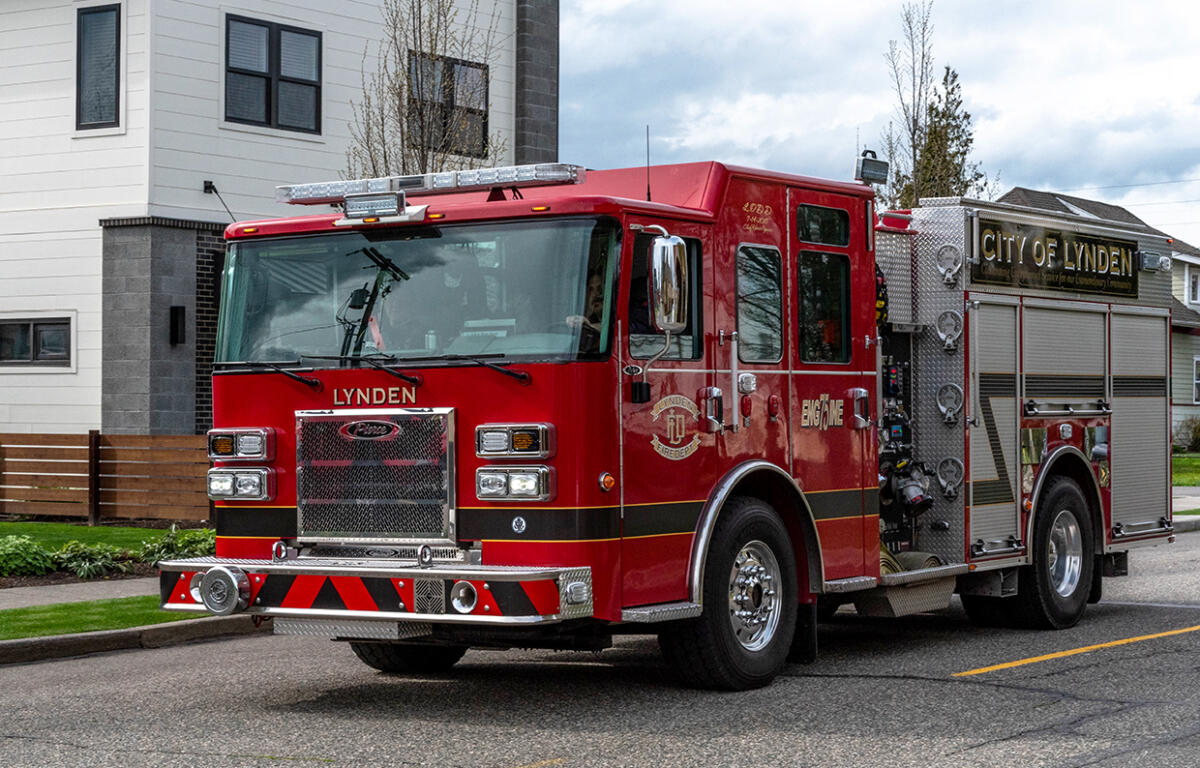

WHATCOM COUNTY, WA (MyBellinghamNow.com) – Two levy lid lift measures will appear on the General Election ballot in Whatcom County. One is City of Lynden Proposition 2026-05, which would fund public safety and other essential community services. The other is Whatcom County Fire Protection District 1 Proposition 2026-08, which would fund fire protection and emergency services.
Levy lid lifts are a type of ballot measure that often cause confusion among voters. While they affect property taxes, they are not new taxes in the traditional sense.
What is a levy?
A levy is a property tax used to fund public services such as schools, fire districts, parks, libraries and emergency medical services.
In Whatcom County, most levies are budget-based, meaning a taxing district first determines how much money it needs to provide services and then collects that amount from property owners within the district.
Think of the district’s budget as a pie. Property owners pay a share of that pie based on their property’s assessed value relative to all other property in the district.
What is a levy lid lift?
A levy lid lift allows voters to authorize a taxing district to collect more revenue through an existing property tax levy than it otherwise could under state law.
It raises the limit on an existing levy, allowing the district to collect more money for services such as fire protection, public safety, parks or libraries. To understand how that can affect property tax bills, it helps to understand how levies, levy rates and property assessments work.
Is a levy lid lift a new tax?
A levy lid lift does not create a new property tax. Instead, it increases the amount collected through an existing levy.
As a result, property owners generally pay more than they would if the measure were not approved.
How are property taxes divided?
In Washington, property values help determine how the tax burden is divided among property owners.
Imagine a taxing district needs to collect $1,000.
There are ten homes in the district, each worth $500,000.
Because all ten properties have the same value, each represents 10% of the district’s total assessed value. As a result, each owner pays 10% of the tax bill, or $100.
Now imagine all ten homes increase in value to $600,000.
Although the assessed value of every home increased, each property still represents 10% of the district’s total value. The district still needs only $1,000, so each property owner still pays $100.
This is why an increase in assessed value does not automatically mean a proportional increase in property taxes.
The important factor is not simply what your property is worth, but how that value compares to the total value of all taxable property within the district.
Why do levy rates decline over time?
This is where many taxpayers get confused.
As property values rise throughout a taxing district, the district’s overall tax base becomes larger. If the district still needs roughly the same amount of revenue, it can collect that money using a lower tax rate.
Using the previous example, the district still needs $1,000 whether the combined value of the 10 homes is $5 million or $6 million. Because the same amount of money is being collected from a larger amount of assessed value, the levy rate falls.
This is why taxing districts sometimes talk about “levy erosion.” As property values increase over time, levy rates can gradually decline even as the cost of providing services continues to rise.
Does a higher assessment mean a higher tax bill?
Not necessarily.
When homeowners receive a notice showing their property’s assessed value has increased, many assume their property taxes will rise by the same percentage. In Washington, that’s often not the case.
Property taxes depend not only on a property’s assessed value, but also on the total assessed value of all property in the district and the amount of revenue the taxing district is authorized to collect.
As a result, a home’s assessed value can increase significantly while its tax bill rises only modestly, remains relatively stable or, in some cases, even decreases.
The bottom line
A levy lid lift allows voters to authorize a taxing district to collect more revenue than it otherwise could under state law.
It does not create a new property tax. But if voters approve a levy lid lift, property owners generally will pay more than they would if the measure were rejected.