


 Listen Live
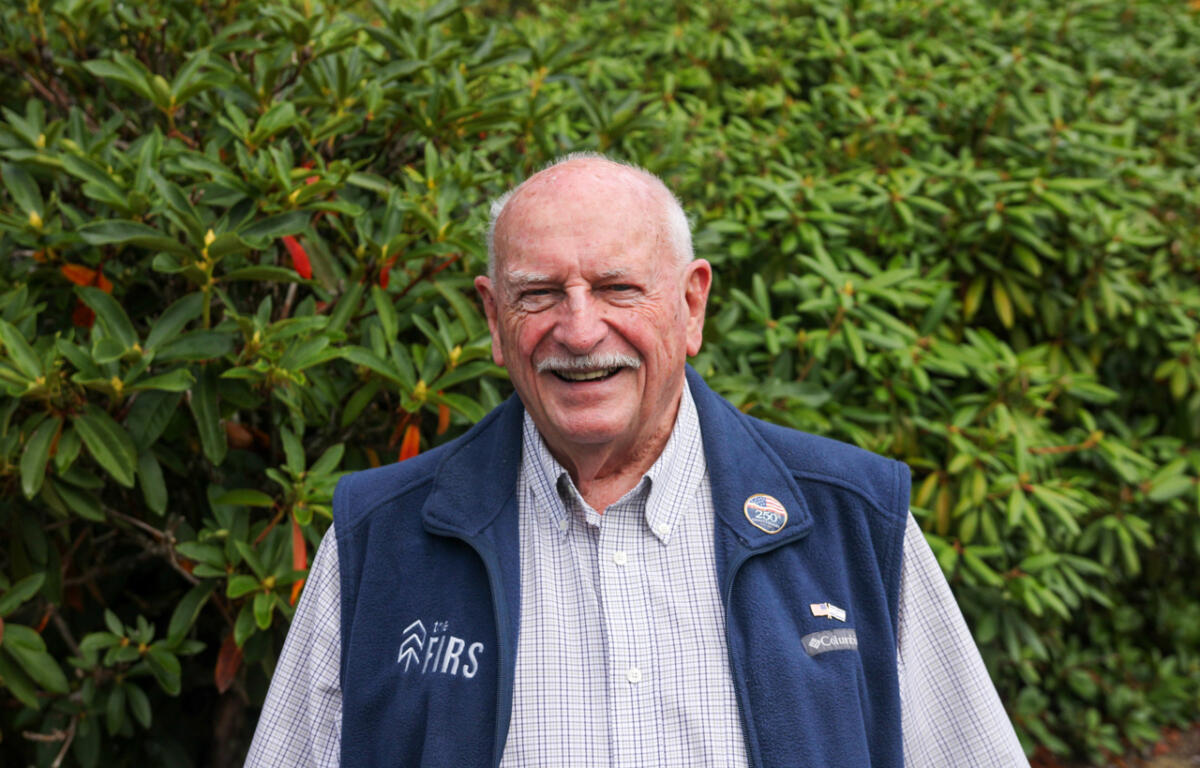

WHATCOM COUNTY, WA (MyBellinghamNow.com) – Edwin Feller is running as a Republican challenger for the U.S. House of Representatives. If elected, he would represent Washington’s 2nd Congressional District and unseat incumbent Democrat Rick Larsen. My Bellingham Now’s Dianna Hawryluk and Jason Upton interviewed Feller ahead of this November election.
You can listen to the full audio below:
Editor’s note: This interview was not edited for length or clarity.
DH: I suppose starting out with the current climate surrounding Congress, as you probably are aware, House Speaker Mike Johnson has sent House members home on recess essentially until after the midterm elections are over.
In a kind of congressional climate like that, what are your thoughts about the way he’s been handling his duties as speaker and how would you get along with other members of Congress?
EF: That’s a pretty tough question since I haven’t been there.
DH: Fair.
EF: So I’d look at Congress as they’re rather inept as far as I’m concerned.
They don’t seem to want to get things done and the Democrats and Republicans do not even see eye to eye on anything. So what the Republicans want, the Democrats vote against. And that is exactly what Mr. Larsen has done is he voted against everything that came up.
He was more or less in the party pocket, not in the people pocket. The SAVE Act, he voted against that. That’s an 80-20 issue even with the Democrats, and still he voted against it. He was in the administration, in Biden administration, where millions of people came across the border unvetted and unvaccinated. He did nothing. Never made a peep about that. Majorca said the border was secure when thousands kept coming across. You can see that in the photos. And so he did nothing with that.
A lot of things he didn’t do that he could have done. And that’s what I’m kind of basing why I’m running, because there are certain things that I see. I worked overseas for 15 years. in our embassies and consulates. Every embassy has a consulate, and some are standalone consulates in different parts of the country.
I worked just in the classified areas, which was the CIA, the DIA, DEA, FBI, the ambassadors section, and the consular general section. Those are all classified. And only cleared Americans are allowed to work on the air conditioning equipment in those areas. So I saw hundreds of people come through the consular lines. Some got their visas, others did not.
Some had no idea where they wanted to go in the States. They just wanted to get out of their country. And so I think a lot of those people found out, well, if I go through Mexico, I can get into the United States and they’ll take care of me.
Well, they’re just a drag on our economy. I call them they’re a parasite on our economy, on our health system, in our schools, because we have to have teachers that have to translate for these students. Then some of these students, I was talking to a teacher who taught third grade and she said, ‘well, I have these students here and I’m trying to teach my children the multiplication and division. We find out these students that are the same age can’t even add and subtract. So we need another teacher to get them up to speed to even add and subtract before they can even get close.’
And that time she says, ‘I can’t deal with the rest of my students so they pass them on and they’ve only learned half of what they should because we have this disruption.’
So that’s a few of the things that I see that need to be changed. I’d like to see more Homeland Security people, because we still have thousands of children that came across the border that are unaccounted for. And we need to find them. A lot of them are in sex trades. Some of them are working places where they’re just child labor. We need to find them, send them home to their parents because they’re all underage. Let’s see, a few other things that.
DH: Yeah, if you don’t mind, Jason, I think I’ve got a question popping up over here.
JU: As long as we’re on the top of immigration, let’s just kind of address the federal crackdown on it, right? We’ve seen a big update in ICE arrests and a big uptick in ICE arrests, specifically here in Whatcom County. I think June hit a high. And, you know, one of the big, top talking points of this administration was we’re going to really focus on criminals and, you know, convictions. And it turns out a lot of the people that are being arrested aren’t exactly convicted criminals. How do you feel about how the federal crackdown on immigration is gone?
EF: I think it’s gone very well. If you come across the border without going through a customs or with a visa, you’re an illegal alien. That’s plain and simple. You came across, you’ve broken the law.
If they are here in the United States without anything on their record, no drunk driving, no domestic violence, the border patrol will give each one $2,600 and a free flight back to where they came from. At that point, they can go to a consular section and fill out the paperwork.
If they talk to their employer before they leave here, they have a job to come back to and a place to live. If they fill that out on their paperwork, they go to the front of the line for coming back into the United States. Though there is a way to do this, but a lot of them don’t know about it. or they’ve been kept in the dark about it. But this came from the gentleman who was the head of the consular section in Tijuana, Mexico. That’s where I got my info from.
DH: There we go. And your experience too working in the consulate, it’s not just all over the world, basically, that’s shaped a lot of your experience and likely your world views as well. What are your thoughts right now on the current international climate? I mean, tensions are pretty high, not just between the US and other countries, but between other countries and other countries. So I wanted to hear your take on, if you can, on what your thoughts are.
EF: Well, having been in a lot of the countries, a lot of Muslim countries, we were always told, ‘Watch your back.’ Don’t ever take anything for granted. Make sure you always carry your passport with you. That’s a must in case you’re stopped, you have your identification.
As far as the Muslim countries, they want to come here to take over the United States. That’s their objective. and they’re well on their way. But they come small. First they come in as a religious group. But it’s more than a religious group. It’s a way of life.
Sharia law is totally opposed to our US Constitution. They believe that their God is all-powerful. Here we have our Constitution. They believe their Sharia law is the law of the land. If you’re a woman, you don’t want this. I was in a lot of these countries where the women were second and third class citizen.
Reminds me, I was in Bashara, Pakistan. And we were on our way to the consulate there. And we’re driving in our vehicle. And next to us is a carry-all with the driver. The front seat was a goat and a sheep. In the back seat was the woman and her two kids. That was her place. The goats and sheep had more priority than she did. That, man, that is right on.
DH: Understood. Were there other countries that you were in, other than Muslim countries, more Muslim majority countries? Where else were you stationed at consulates?
EF: 60 countries.
DH: I mean, I’m not going to have you list them all, but.
EF: Some of them I don’t remember. There were about 10 in Africa. The little less known. The first country it was in Africa was in Niger. And that was a Muslim country, like, yeah. Anyway, we had three guys on our air conditioning crew. We were doing service work in the embassy, in the consulate there.
And three of the guys were in the air conditioning part. They each had three wives, and they each had nine children. The country was so poor that the facility manager of the embassy wanted to have a woman clean the restrooms in the embassy. because that’s what the women, US women, wanted that. They didn’t want a man, because in a Muslim country, men do everything. Women are not allowed to do those things. So he had put out the word, and he had about 100 and some applicants. He said the most impressive one was the woman who was the secretary to the treasurer of the country could make more money cleaning toilets in the US Embassy than she was working for her government.
DH: That’s stuck with you ever since, hasn’t it?
EF: Yes. Also, there was a lot of starvation in Niger, but it wasn’t because of lack of food. Didn’t have money to buy it. That is, there was no way around it. So if you couldn’t afford food, you starved to death.
JU: As we talk about your background, you look at the other side of this race and look at Rick Larson, who’s been in office for years, and you haven’t held elected office yet. Do you see that as an advantage? And if so, why?
EF: I think I bring new insight into our government. Rick has been there for 26 years. Things are pretty much kind of going along. I think it’s time for a big change.
There’s a few things I would would like to get out and that is, I believe with our representatives, since they do so little, they’re more of a parasite on our taxpayers. Just like our undocumented immigrants are parasites on our welfare system, on our school system, on the housing. I kind of put them in the same category. They get nothing done. Or they act like they do, but they have hearings, but then nothing happens. I’d like to have teeth in those hearings, not just talk about it. Get some action. Having been in the AC business, once I left a job, I had to have the equipment working. It should be the same in our Congress. Get things done. Get it enforced.
DH: There we go. It sounds like that’s the priority or at least the mood you’ll bring to the congressional table should you win the election. But per your campaign website, I’m taking a look right over here. The very bottom line of your about section says that you believe that the government has grown too big for some of the reasons you just mentioned here. So why do you want to be a part of that if it is as too big as you say it is?
EF: I wanna reduce it. It needs to go on a diet.
DH: How would you propose doing that?
EF: Well, first I’d find out if a lot of these people are qualified for the position in which they’re working. When I was overseas, a lot of the positions were filled by appointment. That was through the administration. Once the administration was done, then they went to civil service. They didn’t leave. But they didn’t do much to begin with. Then with the new administration, new people come in. So they just keep growing and growing and they don’t leave. We need to find out what these people are qualified to do besides sit at their desk and play cards. I’ve seen that in a lot of offices.
DH: So would you be, I suppose the question that I have following that is, do you propose setting term limits for some of these roles?
EF: Oh, definitely. Eight years for congressman, 12 years for senators. After that, you’re done. And then when you’re old, you get to go on Social Security like I am. And Medicare. You get to take your healthy pension and give it to somebody else. Your health care is great, but it should go to veterans who deserve it. Our congressmen don’t deserve this. They think you’re better than anybody. No, they’re not. The guys got to put their pants on one leg at a time.
JU: You know, you talk about the need for bipartisan ideology. You’re running as a Republican. What’s one issue you would say you stray away from Republicans on?
EF: Well, first we got to see what’s going on. Because I don’t deal with the what ifs. I deal with what if, what is. And so if there’s something that’s out there, I see what it is, then I’ll go for it. I’m not going to deal, what if we do this? What if, no. What ifs don’t work Because 90% of the time they never even come true. And so that’s why I would deal with the what is part of life, not what ifs.
DH: So I suppose going off of that, a lot of things that folks have at the top of mind right now, it’s a pretty contentious environment all across the board on a variety of topics. We mentioned, we talked a little bit earlier, and in fact, you mentioned just being able to afford things on a regular basis. Here in Washington state, the cost of living is certainly higher than in other parts of the country. Any propositions you think you’d be able to make in your role as a congressperson, again, if you are elected, that could help the affordability crisis that we’re facing here in Washington or in the district that which you will serve?
EF: Well, we’ll go back on a little history. Affordability. You know when that word first came out? Trump’s first day of office in his second term. He was asked questions in the Oval Office. ‘How can you help make these products or food affordable for us?’ And after that was the word that the press picked up. Everything, where wasn’t that word used under Biden’s? Things were unaffordable under him, with 9% inflation? They didn’t make things affordable. They made things worse.
In our state of Washington here, we have a gasoline tax that the governor will not remove. So our gas here is higher than a lot of states because the governor put gasoline and on diesel. Everything runs on gas. So when you have diesel where it is, you have diesel for your farm tractors to plant the crops. You need diesel in your trucks to bring it to market. You need diesel in the trucks to bring from market to the grocery stores. All that is passed on to the consumer. Our government in the state of Washington could reduce a lot of that if he would even cut the tax in half. But he wants to keep it up there to make everybody hurt the same, I guess.
DH: On that topic, actually, we recently reported on our newscast regarding the red dye diesel. The president is in large support of making that available to more consumers. What are your thoughts about that?
EF: Well, I don’t see, there’s no difference between red and yellow diesel because doing oil burner repair, we always had the red diesel because it was off-road. So yeah, I knew all about that. My hands, That smell still comes up once in a while. But the red and yellow diesel, there’s no difference. Just that one is taxable and the other is non-taxable.
JU: So you think about the prospect of taking office. Does anything come to mind when you think about an area of everyday life that you can have a direct impact on for us living here in the second congressional district?
EF: Well, I haven’t got that far yet. There’s One thing that bothers me a lot, and that is our fish and game, all the fish bypasses we’re putting in, the millions of dollars we’re spending uselessly. If you’ve gone past all these fish bypasses recently, there’s no water and there’s no fish. So why are we building bypasses for things that aren’t there?
And if the fish do come, they’re not going to be the salmon. There are going to be little sticklebacks and little fish like that. There’s no salmon in those creeks. Then the other thing is, how do we save the salmon? Well, we have orcas out in the Sound that love salmon. We have sea lions that love salmon. We have harbor seals that love salmon. How do we save the salmon when these animals are eating them all?
What I suggest is that we get rid of some of the protection of the sea lions. We shoot them and bring them out into the bay and let orcas eat them. Give them a free meal so they don’t have to go fight for it. Same with some of the harbor seals. Feed them to the orcas. They seem to be the top of the food chain of the big mammals. Give them all a free meal. Then we can save some salmon for us to eat. Right now, it’s the animals that are doing it, not us.
DH: That’s fair. And on that note, the state really has put forward a lot of time and energy, not just into preserving salmon populations, but also other facets of the environment. We are the evergreen state for one reason or another. And there have been various conversations at the federal level regarding environmental rules that go across the entire nation. In terms of keeping the environment healthy and robust here in Washington state, how would you propose continuing to keep environmental protections in place or what sort of moves would you take on that topic?
EF: Well, I think some of our environmental rules have overshot their headlights. Go up in the mountains here, we used to have logging roads where we could travel on. Well, now they cut all those out so all those roads are overrun. So if we have a forest fire, we can’t get to them by road. They have to come in with smoke jumpers or go in by foot. We need to go back to a forest management practice that had areas where we could get into and to help preserve. Cut down the dead trees because right now a lot of those dead trees laying there, just nothing but fodder for a fire that will burn for a long time.
JU: On this general election ballot, there’s going to be a couple of initiatives and just measures that, the whole state decides on. There’s, the income tax on high earners. There’s the transgender women in sports. There’s the so-called parents’ bill of rights, you know, what info parents might be privy to in schools. You know, of those three, are there any you feel more strongly about or you want to speak to?
EF: What is the millionaire tax? We voted that down 11 times, an income tax. And now they’re trying to push it through again. That’s all this is, an income tax. They call it a different name, but it’s still the same thing. It’s going after your wages. And so that has got to be shot down again. They can’t seem to get it through their head that they want to have an income, like everybody, no. We as the state of Washington decided I think 11 different times that we did not have want to have an income tax and still they keep bringing it up.
DH: So what would, in your words, going back to your campaign website here, you are focused on having a responsible economic foundation here in our neck of the woods. What would that look like in your sort of utopia of what this could be down the line?
EF: In which area?
DH: In the one that you represent, the 2nd District, the 2nd Congressional District, yeah.
EF: Well, we have the housing, which we have a lot of undocumented aliens sitting in housing here, which is paid for by our government, which that needs to stop.
The other is our farming, we’ve lost a lot of dairy farms here in Whatcom County. It’s all going into berries, raspberries. We still have some potato farmers. But I’ve seen all that drop from, we used to have, when I grew up on a dairy farm, we had about 800 farms. We’re down to about 20, I think. That’s a big decrease. A lot of that had to do with the EPA, deciding what the farmers could do with their land. Remember growing up right now, they couldn’t spread manure on the land. They had to hold it in a lagoon.
When I was growing up, we did it every day. We hauled it out because we didn’t have a place to store it. And so yeah, it made a big impact on all the farmers to have to spend all this money to build all this stuff. And just because some people decided this is what you have to do, these people haven’t been in the field. They’re always sitting behind a desk thinking about what they can do.
DH: That’s a fair point that you raised too, right? You come from a farming background. There still is a robust agricultural community in the district in which you could be representing down the line. What sort of ways would you like to either protect or uphold the rights of farmers should you be elected to this position?
EF: The farmers need to have more say in what goes on instead of a politician telling them what they have to do. To me, that is the most important thing.
They need to listen to people who are in the field, not what their ideas are. And that goes back to the fisheries people as well. Years ago, they put these logs in the creeks with all the roots on them Those are $2,000 a piece. So you see all these logs with all the roots on them in these spillways. Well, they did that on the Nooksack years ago down by Glacier Springs. They put those in the river for the fish.
Well, what happened is it changed the course of the river and it washed out the Mount Baker Highway in that area. So they cost the state millions of dollars to refix, not refix, to redo that highway to go around where the river had washed it out. Some of these guys need to be educated, not in a classroom, but in real life. That it has consequences of what they’re thinking about. Like with the energy code. This is, if I remember right, from 2011 to 2024, the Environmental Protection Agency and the energy code according to the National Home Builders Association, has added $140,000 to the price of a house. We have to put in all that energy and that’ll never be recouped because you never save that much energy. So this is something that they can sit behind a desk and all these figures work out this way. Well, yeah, they look out that way, but in real life, it don’t work that way.
JU: We do have flood season coming here in Whatcom County. We’ve seen an influx of, some federal funds come in to help mitigate, and the effort to that. Do you think more can be done at the federal level or how do you feel about flood preparedness?
EF: Well, first off, if I get back there, I’m going to go talk to FEMA and I’m going to talk to the corps of engineers. So years ago, we used to have gravel haulers that took gravel off the gravel bars out of the Nooksack. And we didn’t have floods like we have now. We had floods back then. which were just as bad. But right now, the level of the bottom of the Nooksack has risen 6 feet. The dikes have not gone up 6 feet. They’re still the same.
So if we can allow the gravel haulers to move the gravel off the bars, because what happened years ago, this came from one of the gravel, who had a concrete company, he said, ‘we were taking gravel off the bars and then we would wash it because we had a lot of sticks and big stones. We had to separate it and then we put it into ready mix.’ Then the state decided they wanted money for that because they owned the river, they said. So he said, ‘well, it doesn’t pencil out.’ So that’s when they went to all these pits here in the county.
We have a lot of gravel pits. It was all because they couldn’t take gravel off the bars out of the river. I’d like to see them start to take those gravel bars and let the gravel haulers haul that out for free. And that’s what I was talking to FEMA and I talked to the corps of engineers, if we could do that, let them go in free of charge, take that gravel out and they could use it. And if we have to do more, we can take that gravel out and we have a lot of pits we can fill in because there’s a lot of pits out there that are just nothing but water holes. That would reduce the level of the river and our flooding would not be as bad as it has been.
DH: Gotcha. So on that note, right, you’re looking for some more economic opportunity. That could be a job, a paying job that could come to the area. It comes as we recently reported on the non-seasonally adjusted unemployment rate here in Whatcom County, where they reported a 4.5% unemployment rate for the month of August here. So in your role, in your potential future prospective role as a member of Congress, what sort of economic opportunities do you think we could expand more on here and what would you sort of prioritize in bringing to this area?
EF: Well, that’s one. We passed up a good one here a couple of years ago when we didn’t allow the coal trains to use Intalco as their unloading point. You want a little history on that?
A few years ago, my daughter-in-law’s parents live in Beijing, China. And he, her dad is a member of the World Wildlife Fund. And he is a staunch environmentalist. And he was, we were visiting, he was very angry because they had just turned it down at Cherry Point and not to use Intalco as a unloading point for coal trains. And I had never seen him angry before, but his time he was mad. He said, ‘we want clean coal from the US for China so we can reduce our pollution. If we have clean coal from the United States, we can put on scrubbers for about $1,000,000 each of our coal plants. The dirty coal we get from Australia and Indonesia cost about $9 million to do a scrubber. We wanted clean coal.’ And then he gave the little tune and he says, ‘and Tom Steyer, the environmentalist who ran for governor in California, sent his people up here to fill the room with all the hearings. So the people who wanted it really couldn’t speak, but they had all the control and so the county turned it down. Tom Steyer owns the dirty coal plants in Indonesia and Australia, so was going to run into his pocketbook.’
JU: So when we talk about your opponent, Rick Larson, obviously there are big differences between you guys that you have outlined. But when you talk about the need for partisanship and bipartisanship reaching across the aisle, is there any of Rick Larsen’s work he’s done that you’ve admired over the years?
EF: Offhand, I can’t think of any.
DH: Okay. One more question. I have one more question personally on my end that is dominating the news cycle these days. And it’s the proposition of more artificial intelligence data centers in parts of the country. I know that some parts of the state, cities, municipalities, as well as counties have issued moratorium on new permits for these data centers so that artificial intelligence can, you know, spread its wings. What are your opinions on the use of artificial intelligence, building more data centers and where technologies iss going as a whole? I know it’s a lot.
EF: Well, my artificial intelligence is not very high. I don’t seem to be using it very much. I don’t know what I would use it for. I do look up things, but it’s not through artificial intelligence. It’s from people or places that I know and I get on those websites. Then I determine whether it’s false or whether it’s correct. And usually I have other people who I trust have given me insight into those things so I know what is right and which is feeding me a bunch of baloney.
DH: Fact from fiction. So in essence, I take it, and I’ll let you say it in your own words, but expanding more artificial intelligence opportunities across the board that’s probably a no from you or?
EF: There are certain areas where it’ll work, like in medicine. I mean, those that can pick up a lot of things real fast or go through data that’s out there where before it might take days to go through all the, and this AI can do it in a matter of minutes if it’s specific of what you want. If it’s all been put in correctly, that’s where the denominator is. Where was it from? Was it somebody’s hearsay that went in or was it true facts that went in. And that’s where I have to deal from.
DH: So would you support more regulations around the use and development of artificial intelligence?
EF: I think if you come down to it, you should have at least two areas that they get their information from. It just can’t be one sole source where it came from.
DH: All right, you’re good on that end. All right, fantastic. That’s all the questions that I have for you, Congressional candidate. Speaking with Edwin Feller, the Republican candidate for the US District 2 congressional seat on the ballot this November. Those ballots are due on Nov. 3. Actually, I’m sorry, I do have one more question for you. There has been a push at the federal level in regards to mail-in voting. As you know, here in Washington, we’ve been doing mail-in voting for a while. What are your thoughts on all the talks surrounding repealing mail-in voting going back to in-person, having some sort of hybrid. What’s your take on that?
EF: Well, in the state of Washington, we have a problem. You go in to get your driver’s license, and if you’re an illegal, you get a driver’s license, but also you’re registered to vote. And there is nothing to say they can’t vote because they get the ballot in the mail and they send it in.
I have a friend in Ferndale who got his ballot from a post office box in Ferndale. He wanted to go to Canada, but his passport was expiring. So you got to send your passport in to get a new one. So in the meantime, he said, ‘oh,’ so he went down to get his enhanced driver’s license. So he got his enhanced license. And so the woman, do you want to register? He says, ‘well, I already am.’ Oh, okay. Four days before the primary, he got a ballot in the mail. The only place his address was on his new driver’s license. So he got two ballots. So when they go to, when the US government wants to look at the head of our driver’s license division, is there a social security number with those driver’s licenses or with that ballot? That’s what I would like to see.
You just can’t be here, be registered to vote. That doesn’t make you a citizen. It just gives you a driver’s license. A birth certificate means you are a citizen. If you have a passport, that means you had a birth certificate to get your passport. So that is a true form of identification.
DH: There we go. Edwin Feller, the Republican candidate for the US District 2 congressional seat, again on the ballot this Nov. 3. Edwin, again, thank you so much for taking the time to come in and answer some of our hardball questions. We really appreciate it.
Well, thank you for having me.